The Return
 It was ten years since my internship finished at St. Angela’s when I was asked back to help with a surgical team that had some undefined problems involving poor working relationships.
Those ten years were well-spent in research, consulting and reading about dysfunctional organisations, psychopaths and political machinations. I was older and wiser as a result so I agreed to go back to St. Angela’s, the place of my nemesis, to satisfy, in part, my curiosity. How was the place after its merger? Who was in charge now? Had it improved over the intervening years? And what about that rowing club? Who was on the way up, and who was on the way down?
Remember Alex McLeod, the rower, who had been pushed-out by Robert MacCawdor, the then Director of Planning, who had knifed his boss, Duncan, for the job only to be replaced by the returning Alex during the merger? He got promoted to Chief Executive after his successful tenure in strategic planning and investment management.
St. Angela’s was by now classed as a “successful” place providing good services, churning out well-recognised medical research, and winning lots of rowing cups and medals.
Alex, as Chief Officer, had the best office on the executive floor with large dual aspect picture windows overlooking the river and its ever-present rowers practising for the next race and “8s” week. Helen, my saviour, was still there looking after the little people on the first floor and loyally supporting Alex. And Sue was still there, running down corridors with her sheafs of papers, and now, those modern gadgets that make everything even more pressing. She was certainly very busy.
Well St. Angela’s – I’m back to delve around in your murky corridors once again. What have you got for me?
The Assignment
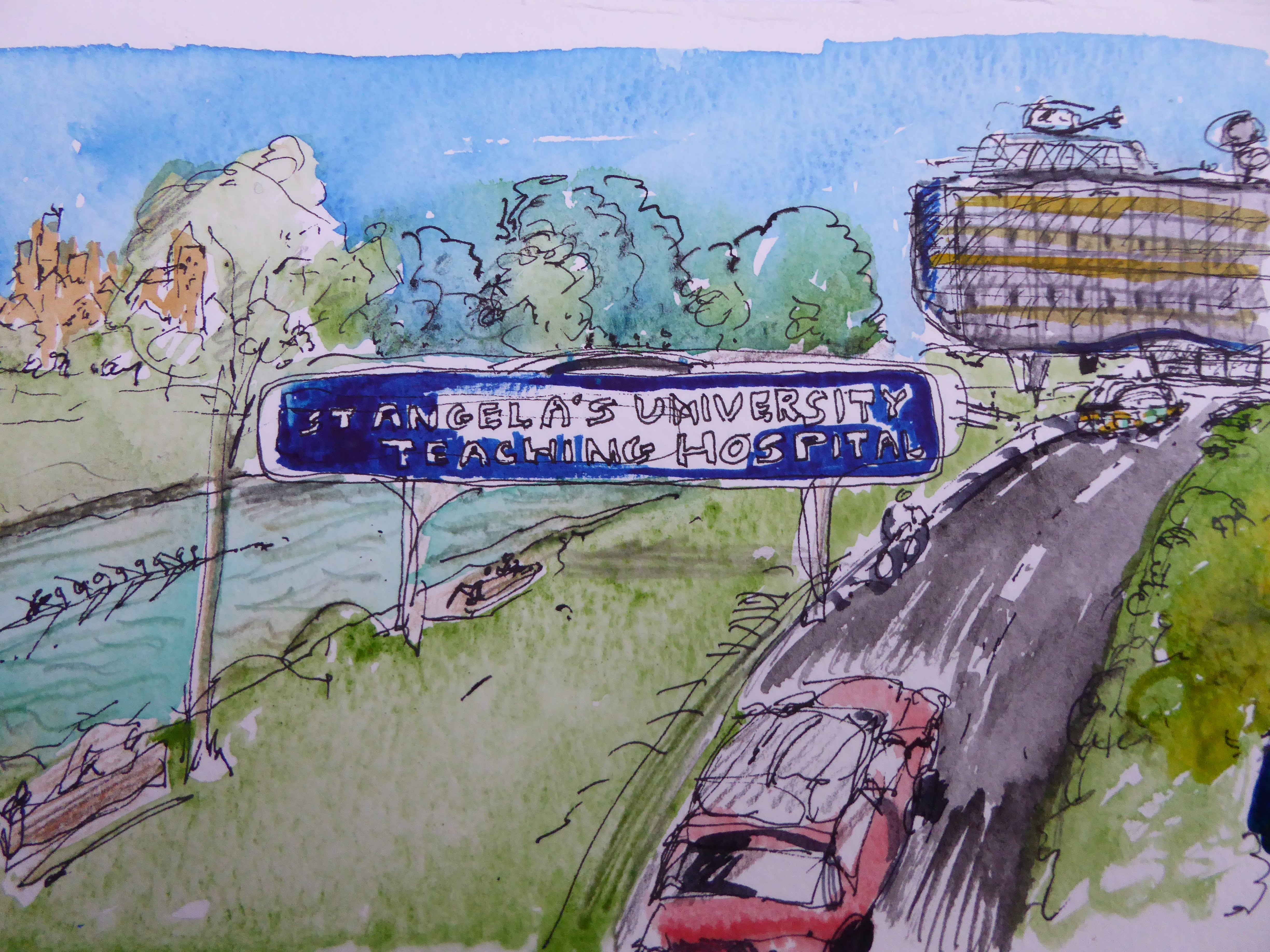
St. Angela’s University Teaching Hospital
Alex and Sue outlined the brief in that palatial office. They were both grave and earnest as they set out the problem. There was some talk of “conflicts” in the cardiac surgery department. Alex was very concerned about any potential damage to St. Angela’s reputation as the department was going to be assessed for its fitness to be one of the national centres.
Sue explained that there were a number of long-term sicknesses, some resignations of key staff, and many grumbling complaints from both patients and other departments, including, critically, the operating theatres and its anaesthetists. Surgeons, it should be noted, cannot work without anaesthetists. Indeed, Sue confided, leaning forward in an embarrassed whisper, that one of the surgeons was probably going to be prosecuted for assault, and that the press had got hold of the story.
Alex explained that the head of the surgical “firm” in question was Professor Leaman, a most distinguished surgeon, but an unpleasant brusque character, who was central to St. Angela’s bid to be a recognised National Centre of Excellence.
Looking out of his window, Alex concluded the briefing with the comment that Prof Leaman was Chairman of the Rowing Club and, for the purposes of this assignment, I would be permitted entry to the Club because that’s where the Prof spent most of his non-theatre time.
The “knife” and his “firm”
My trusty friend, and confident, Helen had informed me over a welcome back drink that Prof Leaman was known as the “Knife”. This was on account of, affectionately, his surgical prowess. But this term of endearment also had a darker side – he was very competitive and got rid of people he did not like.
He was thought of as a distinguished old gentleman, visionary in his day, but probably past his prime. This moment of realisation is very painful for all but it is especially so for those who hold high office where one’s waning expertise is constantly in the public gaze.
It was very difficult to get an appointment to see him as his fussy personal assistant, Jenny, fiercely guarded access to his diary. He was very busy you see with his surgical duties, his rowing club duties, plus he was “big” in the Royal College.
It’s a good job that the passage of time had taught me to be patient; I eventually got my time slot for an initial meeting with the great man in the rowing club. At this time, a surgical team was known as a “firm” and the person that had set it up was known as the “founding father”. The founder in those days had absolute authority over his underlings even though they were all qualified surgeons in their own right.
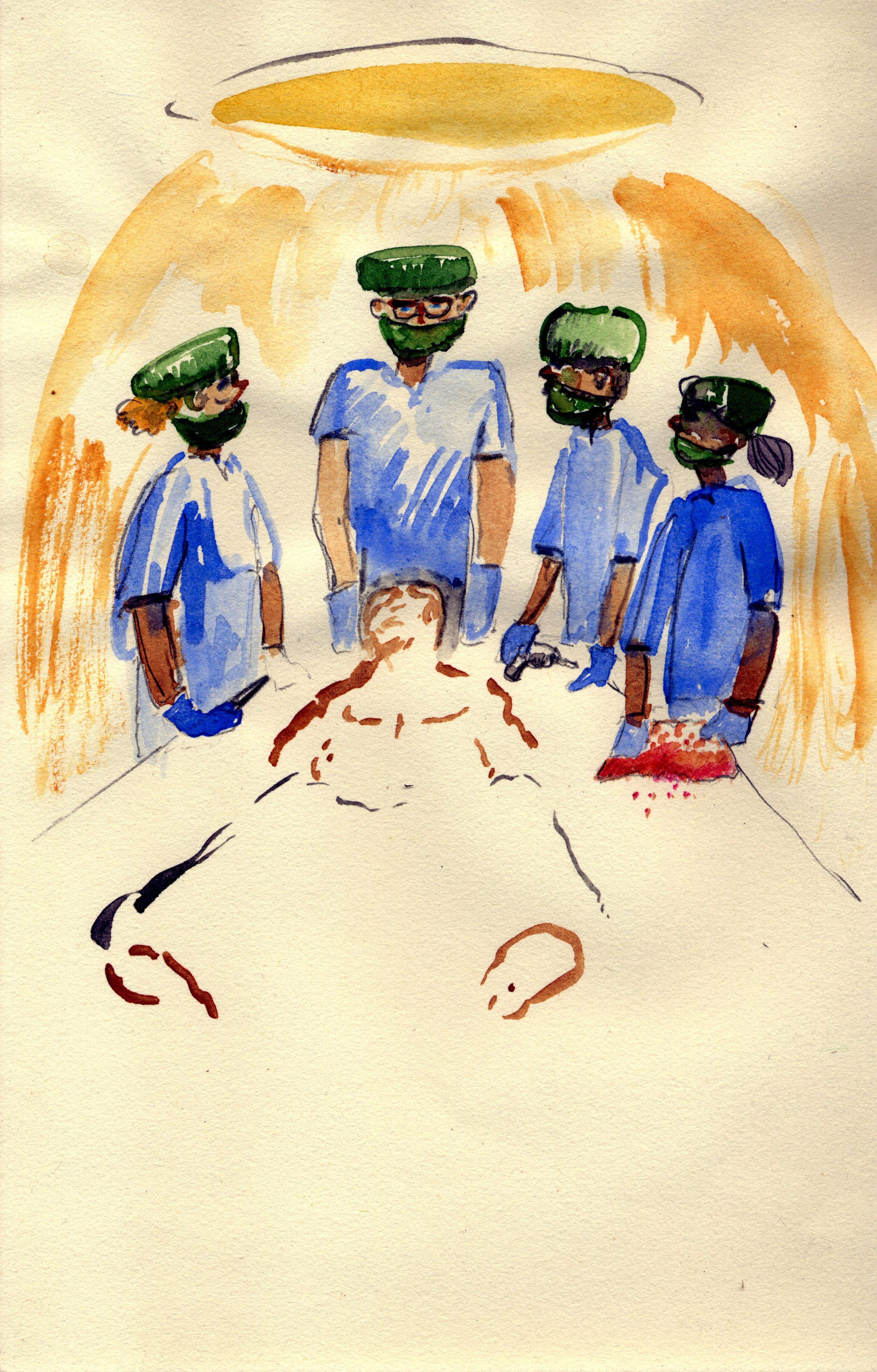
Professor Leaman
And so it was, Prof Leaman had appointed three surgeons to form his “firm”, and he had developed them as a well-recognised expert group in cardiac surgery. The heart of the problem, so to speak, was that they had all been appointed in the same year so they were of a similar age, experience and career outlook. Prof Leaman, as the ageing and waning founding father, would have to choose his successor from these three fine surgeons. The question was how to choose?
Mr. Goneril was everyone’s favourite – a bit of a charmer and always available to help. Mr. Regan was known for being a “rough diamond”, and he was by all accounts, very angry, shouting and swearing most of the time. Mr. Cordell was a man of refined taste, high-born and well-mannered.
Older & Wiser Insights
My tutor and mentor, the Prof, loved Shakespeare. He used it as his vehicle to discuss organisational power and politics, and when I was a post-graduate student, sent us away for a term to read the Bard’s plays in preparation for our scholarly pursuits.
 The tragedy King Lear tells us about the age-old problem of letting-go, succession, and exit. King Lear, with his fading faculties, sets a test for his daughters in order to choose who will succeed him. He has his favourite but he is duped and it all goes wrong.
Being older and wiser, more educated and experienced, I understood the “hidden” brief that had been carefully wrapped in its “conflict management” wrapper.
In essence, this assignment was about moving Prof Leaman out, gently; dealing with the underlying problems that had resulted in so many absences and resignations, and finding a successor. Just like King Lear, Prof Leaman had his favourite.
The nagging question arose: who is pulling whose strings? Who is the puppet master? What is the motivation, the pay-off?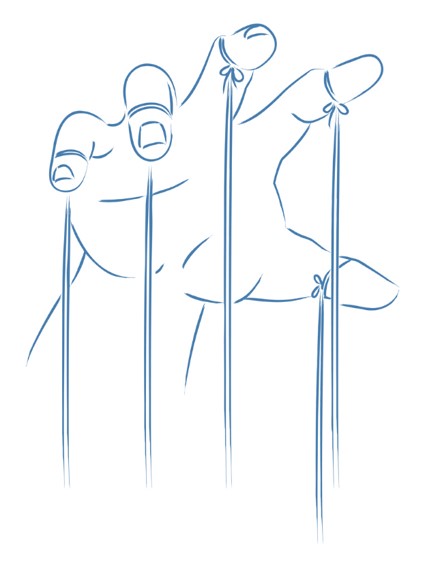
The Rowing Club
I thought I would check out the rowing club before my meeting with Prof. Leaman, especially as I had a pass. It was on the river next to St. Angela’s. The building housed the boat and oar racks on the open and airy ground floor, and the club was on the first floor with a long wide balcony overlooking the river. It had a tartan carpet, lots of polished wood and felt very much like a 19th Century Pall Mall Gentleman’s Club.
It had a bar and lots of “photos” of triumphant crews, and a charming “morning room” with ample armchairs and sofas where St. Angela’s consultants, and their guests, could have tea and coffee, and fancy refreshments, on tap. It was also known as the consultants’ sitting room. It had a warming fire put in each day in the chilly autumnal and winter months by the attendant maid who also tidied-up the newspapers which were freely available.
It was a place of refuge, a place of escape, a bolt hole for the weary who needed to get away from it all. As I took tea, and scoffed the cakes, I observed. This was truly a womb-like comfort zone with one or two old boys snoozing away in the secure knowledge that they would not be contacted as the house rule was, no phones.

St. Angela’s Rowing Club Trophy Cabinet (illustration by Bill Morris)
I noticed the trophy cabinet stuffed full of cups, plaques and medals in the main hall. The rowing club was a quiet place of triumph, of tradition, and of established power. I had arrived, kind of, almost.
Come back next time to meet the Founding Father, Prof Leaman, and his Firm of disloyal underlings…
This is a work of fiction. Names, characters, businesses, places, events and incidents are either the products of the author’s imagination or used in a fictitious manner. Any resemblance to actual persons, living or dead, or actual events is purely coincidental.
 Old Lady by the Sea
Pleasurable anticipation – the scene is set!
LikeLike
Can’t wait!
LikeLike
Pingback: Been Busy Doing Book Things | Old Lady by the Sea