Here We Go Again, Another Warring Faction
 An urgent call from St. Angela’s; an urgent briefing meeting set up with Alex and Sue; an urgent schedule of dates required for a serious case of conflict, and possibly worse. Here we go again, another warring faction job. But what would this problem really be about?
I thought about Professor Leaman’s case a few years ago as I waited in the ante-chamber to Alex’s office. It showed the inadequacy of standard organisational interventions such as “team-building” for serious behavioural problems in expert power cultures. In the intervening years, I had gained more experience with managing the consequences of warring factions in an unpleasant merger that had gone wrong. Perhaps I could draw on this for Alex’s new problem? With “the Chief Executive will see you now,” I was ushered into his baronial corner office.
Psychopathy, prima-donna syndrome, personality cults – how do organisations like St. Angela’s cope with such underlying forces? I reflected on the forthcoming assignment as I gazed out of Alex’s large dual-aspect window at the rowers pulling on their oars. Clouds of warm breath hanging in the cool morning air testified to their labours, and the coming autumn.
Alex looked older, more lined, his face was etched with anxiety. Sue was her busy effervescent self with her comforting bundle of papers and gadgets held close for reassurance. Over coffee, leaning forward, they explained their worries over St. Angela’s standing in the world of conducting Clinical Trials. Serious medical research organisations had to have a licensed unit in order to get the results for their publications and recognition as a research outfit. Verona Pharmaceuticals, a key sponsor, had concerns.
Verona had noticed an unexplained pattern in the data submitted by St. Angela’s for one of its trials. Pharmaceutical companies are vigilant in these matters following years of public debate and scrutiny, and Verona needed to protect its future patients, and its reputation. It had appointed an investigator to work with St. Angela’s to get to the bottom of their queries. Alex asked me to work with Sue and Verona to sort this. A visit to Verona was arranged.
Verona Pharmaceuticals
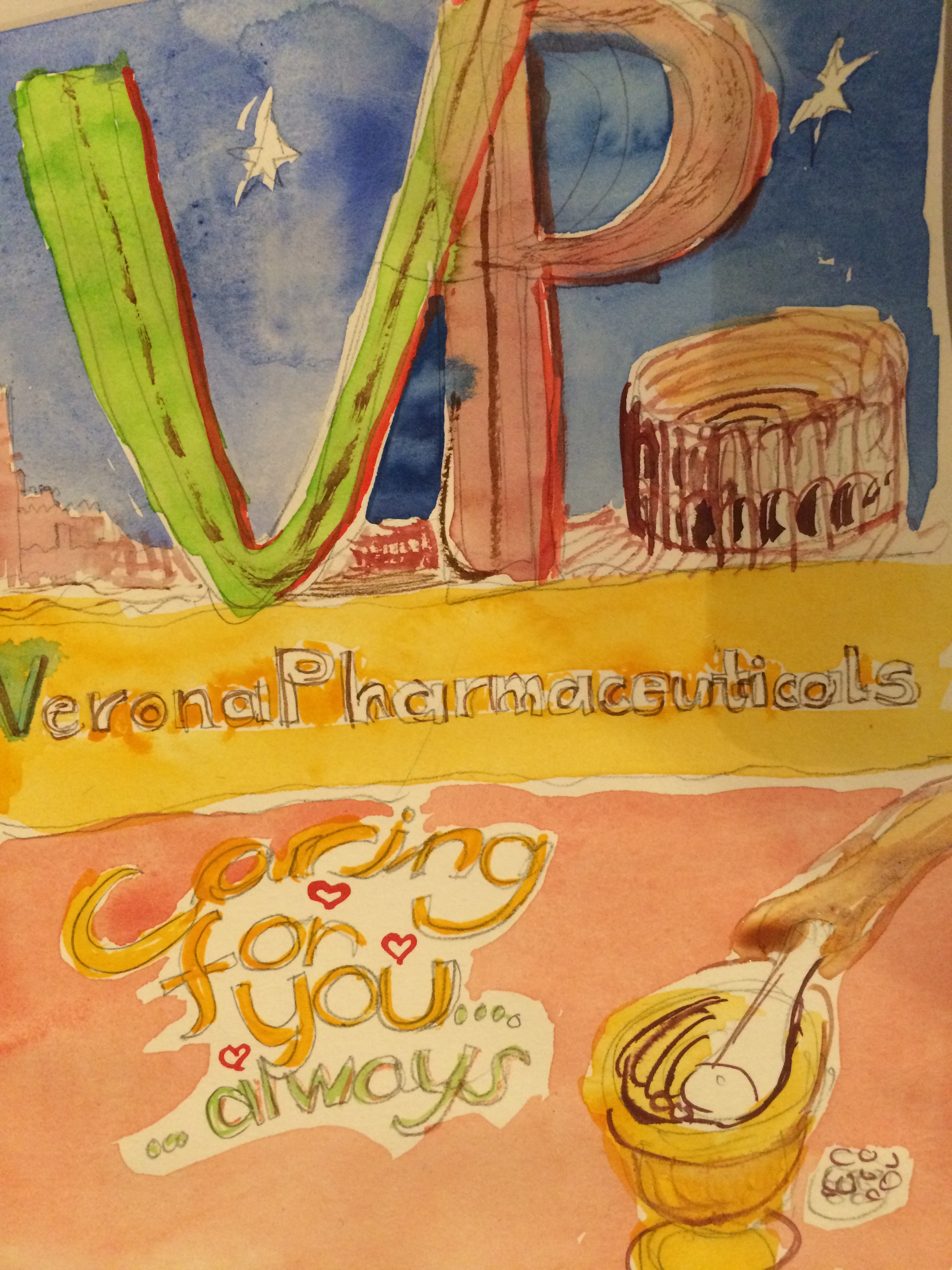
Illustration by Bill Morris
You always know when you are approaching a pharma company campus. The shrub-lined approach road gives a pleasant impression but, this disguises the high-security fences and razor wires that defend such places from intruders. The security gatemen, the checks and the subtle defences at the foyer desk all ensure maximum control so you only see the assigned person in a specific place for a set time. Verona was no exception. I was there to meet their man.
“I’m Verona’s principal investigator for this query,” said Mr Paris as he introduced himself. “We have to protect our patients so we ensure that all trial centres record accurately any side-effects, changes in dosage, and any variation to the trial protocol. This is important as all such data is used as evidence to support a claim for registration for a safe drug and dose regime.” He explained that Verona’s headquarters in Switzerland were not happy with some of the submissions from St. Angela’s, they suspected maladministration or fraud, or both.
Mr Paris was well-versed in the law in this area.
St. Angela’s received a substantial grant from Verona to set up and run its trials, and it had legal duties. Verona’s agents at St. Angela’s were the medical staff who were appointed to conduct the trials on their patients; the pharmacy staff who were appointed to administer the drugs according to the double-blind protocols, and the trial administration staff who were appointed to record the results according to the agreed submission procedures. This arrangement was replicated in trial centres across the country, and elsewhere, and it was designed to ensure integrity and consistency.
St. Angela’s had appointed Professor Jett, one of its top specialists in general medicine, as its Head of the Trials Unit. His colleague, Professor Sharkey, acted as his deputy, and they shared authorship of the research papers. As happens in these cases, there is always an element of tension around whose name goes first, and how many of the research assistants get to be named. It can get a bit like the movie credits at the end of the film – they go on forever and become a blur. The ones that matter are the ones whose names appear first.
Mr Paris had already worked out his investigation procedure and gave me a list of the people he wanted to interview. My first job was to work out the relationship of all the players and their relative power and status. This is called mapping the topography of power. Paris was particularly concerned about how medical and their administrative support staff, and the pharmacy staff, interacted around the trial submissions. It was time to check in with Sue, have a walkabout, and see the ever-helpful Maria, the cake lady.
Theatre in Medicine
Sue approved the “Paris” plan and told me about St. Angela’s next “Grand Round” meeting where I would see Profs. Jett and Sharkey, and possibly some of their support staff in action. There is much theatricality in medicine, and it is nicely exhibited in a regular event in teaching hospitals where the top medics and their junior staff present a “case of interest”. They are then cross-examined on the points of interest in an effort to develop understanding and knowledge. They can become a bit of a joust, especially when the meeting is set up as a debate about contrasting views and approaches. They can also become exhibitions of power and status, even to the untrained eye.
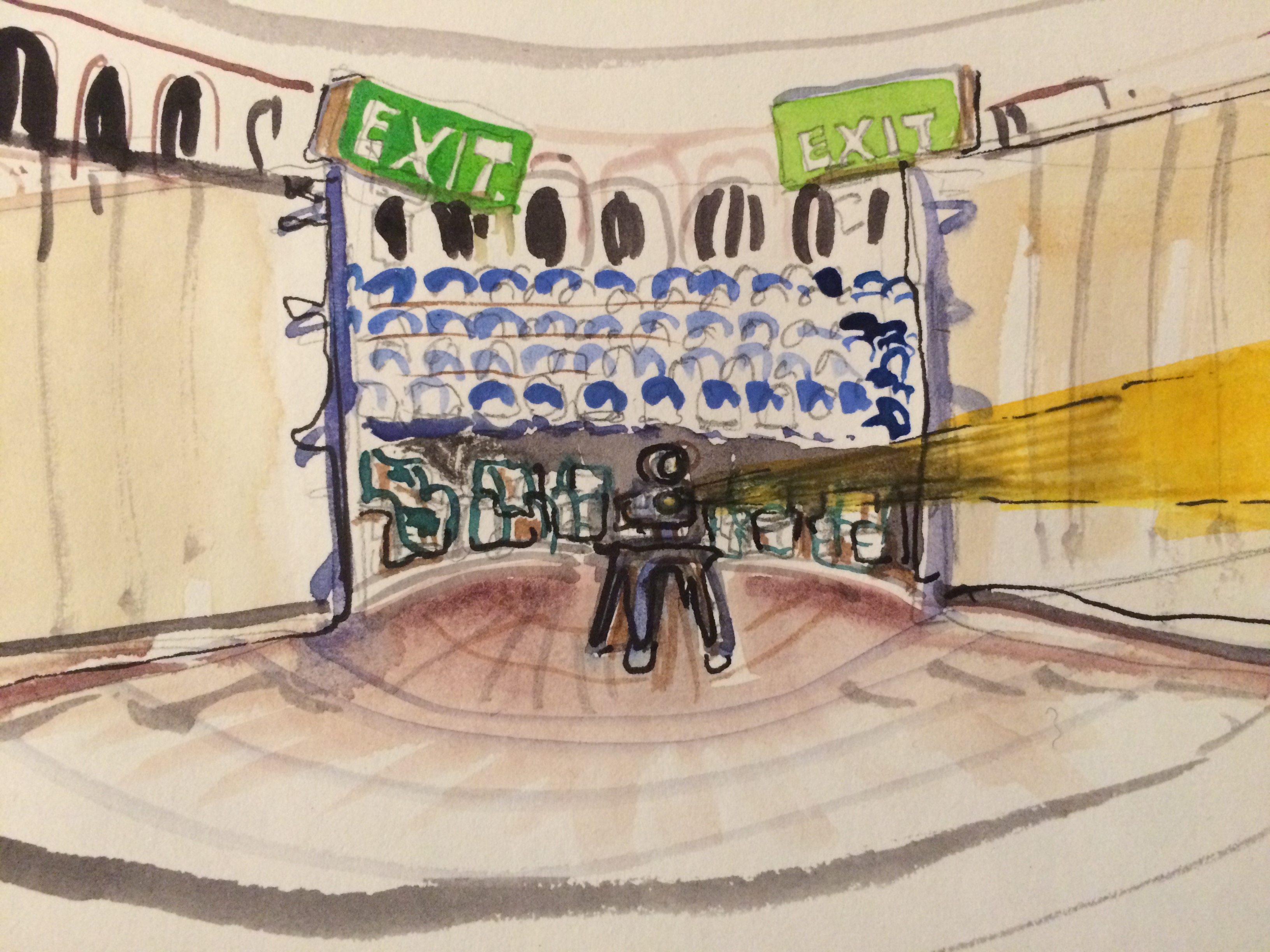
Illustration by Bill Morris
On my walkabout around St. Angela’s, I saw the familiar Rowing Club; the bank down to the river where the hospital’s rowing team hauled their boats up and down every day as they practised for the next big race; and the new buildings that had become part of the hospital’s much expanded campus. St. Angela’s was clearly successful despite losing several research units, including Prof. Leaman’s – my previous case. The place was majestic.
Organisational walkabouts before the formal interviews are important as they give a feel for the backdrop and context for people’s actions.
I visited the main lecture theatre in the heart of St. Angela’s campus. Peeking through the heavy double doors, I could see the rows of racked seats that focus the gaze into the pit of the theatre. It is quite Roman, quite gladiatorial, quite intense.
This was the time before the ubiquitous use of laptops, PowerPoint presentations and modern gadgets for electronic pointers. The overhead projector was used to project hastily put-together hand-written overheads. The legibility of the writing depended on how near to time the overheads had been prepared. Usually, it was a rushed affair. Despite all this, the “shows” did their job, and the participants usually learned something.
I noticed the front two rows had better quality seats with padded cushions compared to the cheap plastic ones in the upper rows. I understood from the chuckling cleaner that the plush seats were for the Professors. Enough said. A sign outside the theatre indicated that next week’s Grand Round meeting would feature representatives of Professor Jett and Professor Sharkey’s teams presenting some of their research work. A must see.
Maria, Can You Help?
In times like these, dear old Maria, the cake lady in the Rowing Club, always helps. As I still had admission rights to this exclusive place, I called in to see her and get some background on the Profs. and their teams. Obliging as ever, she poured some tea for me, and chatted away as she put on the fire to take the morning chill out of the room. She told me of finding the “No. 10” letter pinned to the photo board after the Leaman debacle, and the mirth that it had caused. The consensus was that I had done it – a charge I neither admitted or denied.
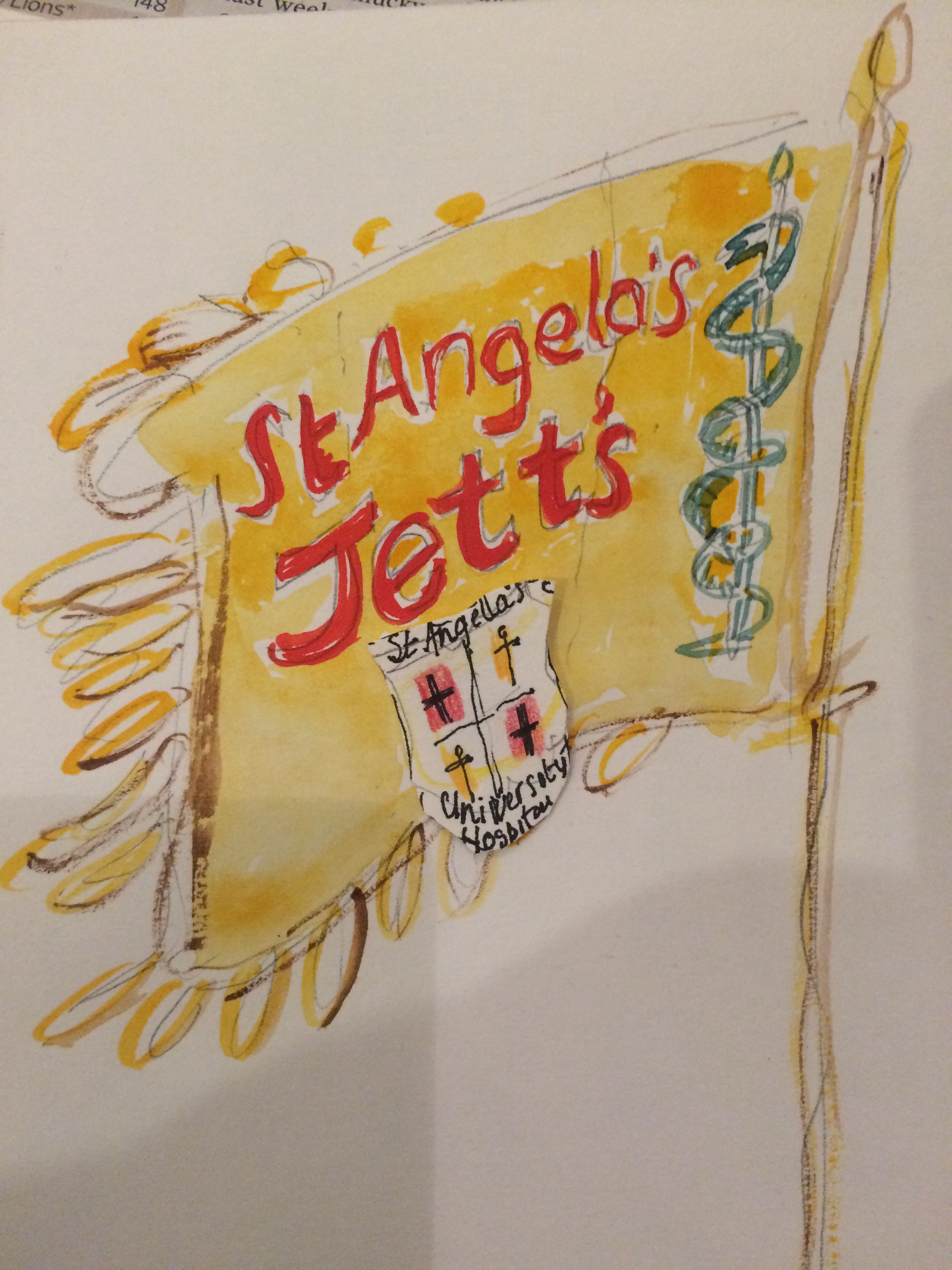
Illustration by Bill Morris
She told me about Prof. Jett. He was a brilliant man but he had some “hot heads” in his firm. They were always at odds with their colleagues in the rival firm of Prof. Sharkey. It made for tense relations. But there were also some nice young doctors who were very polite. She particularly liked Ronny, a new intern who she thought was a bit of a dreamer.
What about Prof. Sharkey? He was a brilliant man too, he also had “hot heads” in his firm, but he was much stricter with them and kept them under control, mostly. He was a disciplinarian compared to Prof. Jett who liked to see “his boys” win in action against Sharkey’s boys.
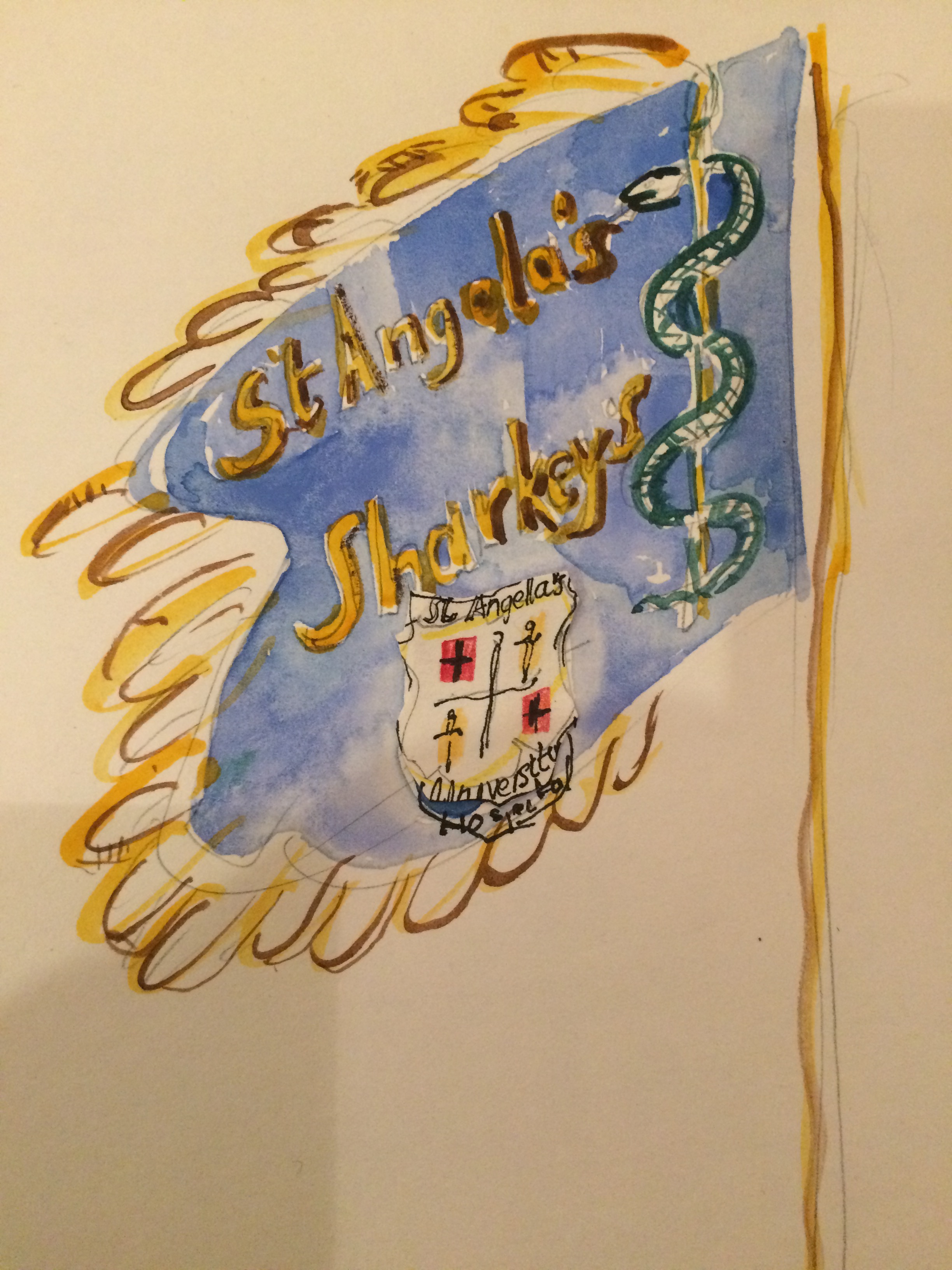
Illustration by Bill Morris
How did the pharmacy trials team fit into all this? I asked. Prof. Sharkey, she told me, had some links. She didn’t know much about them, but she did know some of the important people because they were allowed into the lounge. She told me of the old Chief Pharmacist – he had been there for years: Lawrence Fryer. He was very fussy and liked his tea and cake just so, at 3.00 pm precisely. He was usually accompanied by Miss Nurse, whom Maria called the dragon lady.
She always wore her perfectly clean, crisp white coat buttoned-up with her pens and spatulas lined up neatly in her top pocket, and she wore neat lace-up shoes, for safety. She was not the life and soul of the party, but she looked after her intern charges well. She made cakes and other fancy things for the hospital parties. She liked to see a good spread, neatly laid out, of course.
Rules in Pharmacy
 A visit to the pharmacy was in order. There were long corridors and bare walls to walk past before finding a heavily locked door, and a little window in the wall to speak to the receptionist. I was admitted to meet Mr Fryer. He came towards me peering over his half-moon glasses, smiling. His white coat, buttoned up, stretched around the buttons as he was somewhat overweight.
The Pharmacy is a place of precision where the old traditional galenicals, kept for decorative purposes, mix with the very modern packaged medicines. Rows and rows of them, going on forever, all seemingly the same. Mr Fryer led me down a labyrinth of shelving to the inner office and dispensary suite of the Clinical Trials Unit. It was large; it needed to be as Mr Fryer reckoned that St. Angela’s was conducting up to 30 major trials at any one time, and a lot of space was needed for the record-keeping and voluminous paperwork. He was keen for me to discuss the “Verona problem” with Miss Nurse.
Miss Nurse showed me around the neat rows of white boxes, and laid out the flow of paperwork that she managed as part of the trial submission work. Each set of trial material was segregated from the other by discreet dividers. The impression given was of order and control. It seemed inconceivable to me that the source of the problem could be here. Miss Nurse ran a tight ship and her interns always passed their exams.
When new drugs are tested, strict rules are needed to prevent any possibility of cheating, or even unconscious bias. The Clinical Trials Unit’s rules were clear: no medics’ eyes on the preparations or the codes; no breaking the codes to anyone without the specific permission of Verona; and everything to be double checked before being signed-off. All submissions of results had to be approved by Miss Nurse, and she kept her approval stamp in her locked drawer. She was the respected secretary to St. Angela’s Ethics Committee, chaired by Prof. Sharkey, and sat with his team every Thursday at the Grand Round meeting.
Where to start? It did not seem possible to get anything but the correct submission from this place. And Mr Fryer was very helpful and obliging. I wonder what Mr Paris thought? Maybe attendance at the next Grand Round meeting would throw some light on the situation.
 Old Lady by the Sea
Welcome back! I have been waiting for this exciting instalment – I love the illustrations! Ros
LikeLike
Re read from the very beginning – loving it. This is SO addictive!
LikeLike
Pingback: Been Busy Doing Book Things | Old Lady by the Sea