 Infectious Prima Donna Syndrome
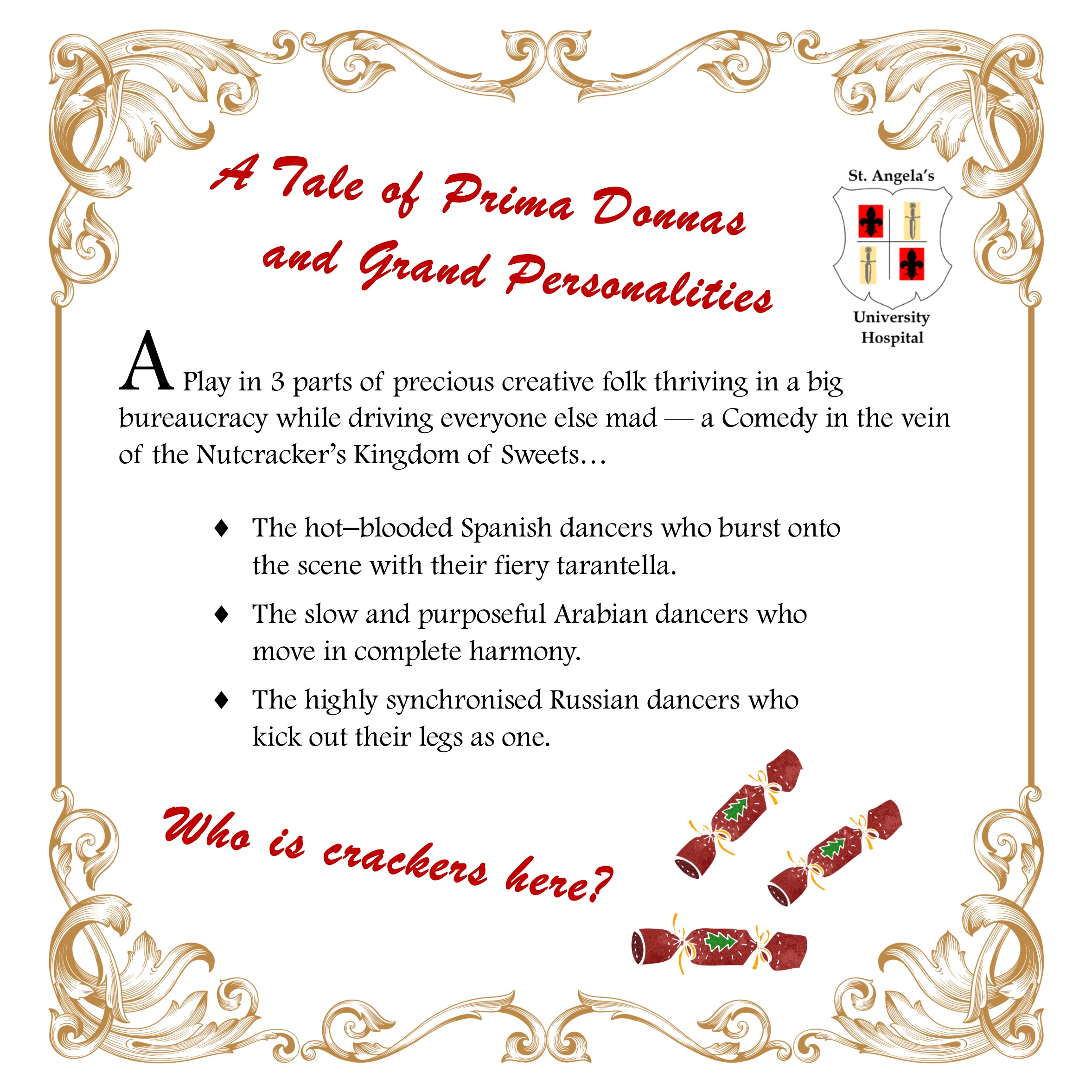
Alex, our weary Chief Executive, had a lot on his plate including a basinful from Reggie’s Children’s Hospital.
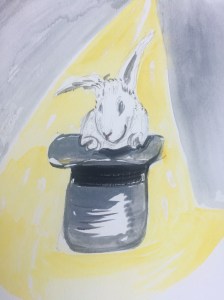
Illustration by Bill Morris
The junior doctors were constantly complaining about their poor training, supervision, and rotas …; the managers were always anxious that the rules and procedures were not being followed; and the ever-present car parking monster was biting at his heels again.
More seriously, the nurses were grumbling as the nappy problem was getting under their skin. Alex was constantly parrying the press who smelt blood on The Nappy Story. Meanwhile, he had a new building to construct in honour of Reggie’s benefactor.
Sue, his ever-present supportive director, was in her element “doing OD,” calming everything and everyone. She smoothed the frictions between Reggie’s five committees as they planned for the new building. They were optimistic that the ceremony to turn some earth to show the building was on the way would happen soon. Indeed, to help things along, Dr St. Clair, Prima Donna number one from last time, had already ordered a golden shovel. And Sue was left to sort out the payment for it, like the posh bunting invoice for the recent fête.
Life at Reggie’s bowled along in its familiar way when another Prima Donna problem emerged. Like oil and water, Prima Donnas, our creative types, do not mix with bureaucrats. They can tolerate each other for a while but they won’t bond, and they will always separate into their own worlds. In chemistry, there is a useful compound called an emulgent which helps oil and water to mix to form an emulsion, but again only for a while. So too in organisational development, we have some people who can act as an emulgent force to ease the tensions between the creatives and bureaucrats so they can work together – as long as you don’t rely on the mix working for too long.

Illustration by Bill Morris
Such people are rare. They are not bureaucrats, they are natural diplomats, arbitrators, and bridge-builders. You find them in pockets, for example in the theatre where Stage Managers embody this complex role. I learnt about them during my time at the Western Theatre all those years ago, where one of them went rogue. She over-empathised with the actors and other creative types and became a Prima Donna herself, much to the dismay of the theatre’s general manager and artistic director.
This was useful experience in coping with our new Prima Donna problem at Reggie’s. Dr Anderson, like Dr St. Clair earlier, was a Prima Donna. Sue had carefully nurtured one of the ward sisters, Camilla, as the emulgent who could help her colleagues to work with the obnoxious but essential Dr Anderson. The problem was the infectious nature of the Prima Donna Syndrome which resulted in Camilla becoming a Prima Donna herself. What a disaster – she and Dr. Anderson together doubled the Prima Donna problem for Alex.
The Case of Lord Eeyore and Lady Bray
Dr Anderson had a serious case of the Prima Donna Syndrome. He was from a well-to-do family and had the airs and graces to show for it. He was always moaning about his lot in life – he felt so disappointed at ending up at Reggie’s. He felt he should have achieved more. He felt he should have been recognised as a national player and been invited to have tea with the Queen. He was grumpy and pessimistic most of the time so he was nicknamed, behind his back of course, Lord Eeyore, after the grumbling donkey in Winnie-the-Pooh.
Dr Anderson hated bureaucrats and all their silly bureaucratic rules and procedures. Whenever anyone confronted him with them, he could be seen remonstrating in the most theatrical way against any constraint, no matter how reasonable it was. His  favourite turn in such situations was to wave his stethoscope (that old symbol of medical power) in the air and cry out “what the bloody hell is going on?” One felt his pain. And then ran away laughing.
His junior doctors hated him. He wasn’t very nice to them, he couldn’t teach, and they complained about him constantly. The nurses disliked him too for looking down on them as if they were his handmaids. He insisted that they take all the flowers out of the wards when he was doing his rounds, and he shouted at them to keep the noise down so he could concentrate. Not an easy thing to do on a children’s ward …
Camilla, the long-standing children’s wards senior sister was our all-important emulgent force. She knew how to handle and calm Dr Anderson. She was able to read his mind and soothe his temper tantrums. She used to lead the “welcoming party” when Dr Anderson arrived at Reggie’s. She would greet him as he stepped out of his car and feed him tea and biscuits while she sorted a junior to park his car for him.
The latest conflagration resulted from Dr Anderson’s naughty habit of going to conferences and picking up new bits of kit. He would persuade the company to loan him a shiny new pump, or something, and he would bring it to Reggie’s for use on his wards. Of course, the details of its safety, the costs, and the future supply of its consumables were not his concern. Camilla always fixed things and sorted out the bureaucracy. If the juniors or nurses protested, he would have one of his turns and everyone would be upset.
The problem this time was when Camilla was asked not to introduce new equipment in this way, and to follow the approved procedure. The hapless new manager who made the request had no idea what he had done. She exploded in rage that her authority 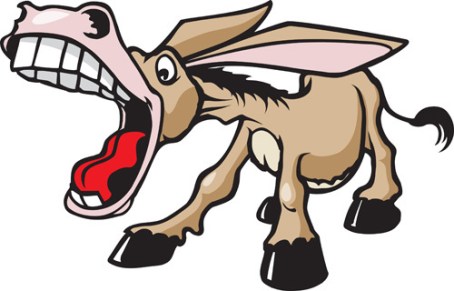 had been undermined by a bureaucratic administrator. She had morphed into Dr Anderson before everyone’s eyes. She had got infected with his Prima Donna Syndrome and was known thereafter as Lady Bray on account of the noises she made when she was angry.
Theatres do Emulgents OK
Running a theatre, putting on a play, and making some money out of it is a complex business. Over the years, theatres, which are filled with Prima Donnas, have developed potent emulgents called Stage Managers to splice the creatives with the administrators for the duration of a show. Hence, they survive. In sorting our problem at Reggie’s where Camilla went rogue, I recalled my experience in a similar situation at the Western Theatre all those years ago.
As a junior in pupillage to Debs, the Western’s director of development, I watched in awe as their Senior Stage Manager, Fiona, bridged the great divide between the creatives and the administrators. She and her team managed the tensions between the creatives – the actors, the creative directors, the playwriters, the costume and set designers, and the theatre’s artistic director.
They managed at the same time the tensions between the back of house crew – the lighting technicians, the set builders and the costumiers and seamstresses- and the front of house team – the sales and marketing, and catering, people who face the public. They also spliced the lot together with the general manager’s team of accountants, engineers and researchers. It was very skilled, diplomatic, and hard work.
Fiona had the theatre in her blood and bones, and every fibre of her body. She was totally immersed in it and worked all hours to ensure “her plays” were a success. She became obsessive about “her actors” and “her sets”. She checked and re-checked her team’s work to ensure nothing could go wrong for when the actors arrived for their read-throughs and rehearsals. Her increasing zeal for perfectionism, while it excluded her team, pleased the creatives, especially some of the top actors and creative directors.
The tinderbox of emotions exploded when the chalk marks on the stage to guide the props team and the actors’ positions were put down in the wrong places. The new junior stage manager who made the error was taken apart in front of everyone. Others joined in to defend the poor soul. Fiona could not cope with this apparent disloyalty. Wound-up tight like a clock spring, she lost it – she shouted and raged like a trapped animal and had to be taken out of the rehearsal room.
All activity on the play was suspended while crisis talks were organised at the top level. Everyone was talking about the explosion. No-one could quite believe what they had seen and heard. Our emulgent had become a Prima Donna, gone rogue. The theatre’s artistic director stomped about in a rage and implored the general manager to sort it out before the actors got so upset that they would walk out.
Hope, Hope, is there No Hope?
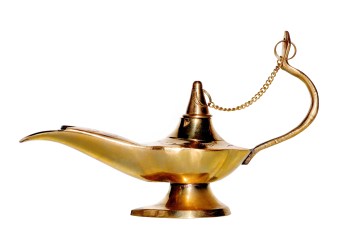 I learnt so much while working at the theatre for Debs, its director of development and fixer in chief of people problems. Looking back, the whole stage manager set reminded me of the part in the Nutcracker Ballet when the Arabian dancers arrive on stage. The slow and deeply rhythmic oboe music introduces a ballerina held aloft by four male dancers. As they proceed, she must hold her whole body steady in the shape of an Arabian magic lantern. It requires complete coordination and synchronisation of movement and a lot of strength. It’s how stage managers’ teams work – they are as one, not a step out of place; they have to be of one mind. So Fiona going rogue was a complete disaster.
The crisis meeting was very emotional. The artistic director could not sit still. He kept patrolling round the table like a hungry tiger as the problem of what to do with Fiona was discussed. The general manager, desperate to calm him, pleaded with Debs to do some “team-building”. At this, the artistic director was beside himself with rage, “hope, hope; is there no hope?” he cried in despair at this fatuous suggestion. Evan in this crisis we couldn’t suppress an internal giggle at his thespian mannerisms.
Cue Debs and her confident calming techniques. She took over the problem like the pro she was. This is a case, she said, for a Personal Development Plan, a “PDP”. It sounds so benign, and I hadn’t got a clue about what it was and how it would help. But I learnt how to use this cloak to get at the core of the problem.
Debs, with me in tow as her pupil, set up a series of interviews with Fiona to discuss what had happened and the reasons that gave her outburst such force. It turned out that she wanted to be an actor but her efforts had come to nothing so she had opted for a stage manager’s role as the next best thing. She felt deeply under-recognised even though she received much praise for her work. She had no insight, or care, about how upsetting and alienating her behaviour was. She was so scared that someone in her team would usurp her role if she went on leave, she decided not to take any. She became an exhausted, self-hounded, Prima Donna. This is not good in a stage manager, or anyone else.
Debs developed, with great sensitivity, a “PDP” for Fiona. She was sent on “gardening leave” to give herself, and everyone else, a break. One of Fiona’s juniors was “acted-up” into her role so the play could go on. The general manager and the artistic director agreed to fund a “special project” to which Fiona could return and focus her energy on some long-term issue. Order and calm were restored.
Lady Bray Gets a “PDP”
Back at Reggie’s, confident of my ground, I suggested a “PDP” approach to Sue for the Camilla problem. In careful interviewing, we discovered that Camilla had been a dedicated children’s nurse and a loyal long-serving member of staff at Reggie’s since Dr Anderson was a trainee. She felt she knew much more than the junior doctors and they were ungrateful for all the teaching she gave them. She resented them by-passing her on promotion but felt confident when Dr Anderson was around. He praised her constantly and they developed what is sometimes called a synergistic power relationship.
She loved her role as the queen bee on the wards. She, like our stage manager Fiona, became very protective of “her” Dr Anderson and she felt threatened if anyone stepped into their world. She was over-reaching her legitimate role as a senior sister for the children’s wards. No doubt egged on by Dr Anderson, she modelled herself on him. It had to stop.
Sue, with Alex’s approval, arranged for Camilla to take a break from work which was dressed up as a sabbatical. Reggie’s found a secondment for her to the regional office’s “special projects” division. The junior doctors and nurses were calmed with a new acting ward sister. Dr Anderson’s worst excesses were contained by the Chairman, Lady (a real one) Honoria. And Alex approved a revamped and stricter procedure for the introduction of new equipment to the wards, much to the chagrin of Dr Anderson.
“The bureaucrats are ruining patient care,” he cried, but fewer and fewer people were listening. Sue felt that this was the best they could do to contain him as Reggie’s still needed him. But for how long? Sue was working on a replacement while reducing the extent to which the whole organisation relied on Dr. Anderson. The need for an emulgent was falling away.
Alex so wanted this problem to go away as the press were nipping at his heels. He couldn’t shake them off. They were tracking the next big problem- the nappy scandal. An error in the new computer system had led to the hospital running out of nappies. It now over-compensated and the deliveries just kept coming. Wherever you went there were walls of boxes of nappies.
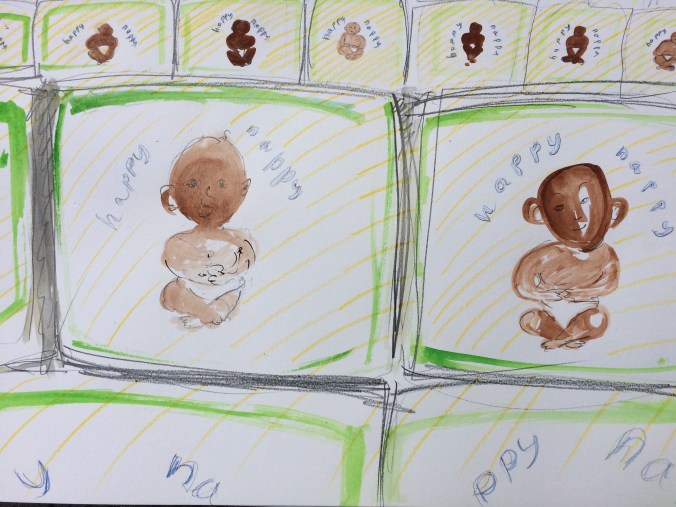
Illustration by Bill Morris
Continuing The Nappy Story, the local paper’s evening headline screamed: “Nappies; thousands of ’em”…
 Old Lady by the Sea
Absolutely brilliant, please give me more! After 33yrs of nursing and now in my final 5yr stretch in management (hopefully!) I can really identify with the characters! It’s wonderful jumping straight into the familiar territory of a dysfunctional work family and attaching their personalities to your own workplace! Fact based fiction creates that reassuring knowledge of ‘thank goodness it’s not just usme”!!! Loving the Reggie illustration which you did a pretty good impersonation of for us lucky ones at yesterday’s fabulous talk at the Strategic Leadership programme in Newcastle, which I feel privileged to have listened to. Now, please get back on that beach with your pen and bring those wonderful tales to life!
LikeLike