“Mr. Treasurer” — the Real Power
Hospitals and care for the poor in the 19th Century were provided by charitable institutions which were supported by generous benefactors. The rich paid for their own doctors and care at home. It was all very rudimentary.
By the late 19th Century, London was teeming with people who were jammed into overcrowded, filthy and insanitary conditions. Those in work were often injured in the course of their work. Poverty drove many women and children to prostitution and disease.

London Slums in 1872 in the Whitechapel area
Drunkenness and malnourishment were rife. Consequently, the demand for bigger hospitals and more care, and more funds, escalated year on year. It was getting out of control. This placed great burdens on the benefactors so those in charge of local hospitals held fund-raising events, flag days, and vied with each other to have the patronage of members of “Society”, titled and connected people, and above all, wealthy people.
As the funds flowed in, and their disbursements became more complicated, hospitals found themselves in need of more than a lowly clerk or local churchman to administer the monies.
It’s All About Connections
The London hospitals became big enterprises in competition with each other for more prestige. They needed more patients, more specialisation, and more teaching facilities. The Teaching Hospital was born.
Increasingly, they needed experienced administrators to handle the estate expansions, big investments, fund-raising, networking dinners, and the emerging medical power systems and the Medical and Surgical Royal Colleges.
 Such institutions, like our South London hospital, Queen’s, by the late 19th Century, had a President of the Hospital Board who was a peer of the realm, and members of the board who were drawn from “the great and the good” in Victorian political and military life, and royalty.
To control the (modern concept of) workload, the President appointed a “taking-in” committee. This was overseen by “Mr. Treasurer”, the administrator for Queen’s Teaching Hospital. This committee was the all powerful gatekeeper which selected patients for admission.
There was a priority list of individuals who had been selected as being “worthy” of Queen’s benefaction. Queen’s was a High Church Anglican institution and as such, its chapel in the front quad and its minister played an important role in who got admitted.
Professional Administrators
Where did the much needed professional administrators come from? Where were they trained? Where did they get sufficient experience to work in the great London Teaching Hospitals where they had to manage the big egos and complex competitive power systems, administer publicly accountable funds, and constantly get more funds?
One of the features of Victorian life was the development of the new professions. Medicine followed the traditional pathway set by the Church and the Law. But quietly, in the background, another profession was developing to serve the growing needs of the Empire and the East India Company (EIC).
After a “wild west” start, the EIC recognised the need for professional trained administrators to manage its growing businesses and investments in the East, and particularly in India.

‘Haileybury College’, 1923. Artist: Unknown.
On 23rd October 1805, it bought a site for its new training college near Hertford in outer North London called Haileybury. Its aim was to educate civil servants to work in India. The EIC had asked William Wilkins to design a magnificent college building in the fashionable style of a Greek revival, like the one he had designed for Downing College, Cambridge. It opened for business in 1809.
Its intakes were the educated sons of “the great and the good” who had not chosen, or who had been rejected by, the Law, the Church or the Army. Training at Hailey Bury mirrored that of the Army at Sandhurst. Its students became proficient in Eastern languages, especially the then Indian languages of Hindi, Urdu, and Pashtun. They learnt about the continent’s diverse cultures and rules of law under the many rajahs. They also studied the growing body of commercial and international law, and, as many went on to be local magistrates across India, they studied how to administer local laws.
Haileybury graduates were known as “writers”, a rather understated term for those who were proficient in political economy and history, mathematics and natural philosophy, classics, law and humanity and philosophy.
Haileybury Comes to Queen’s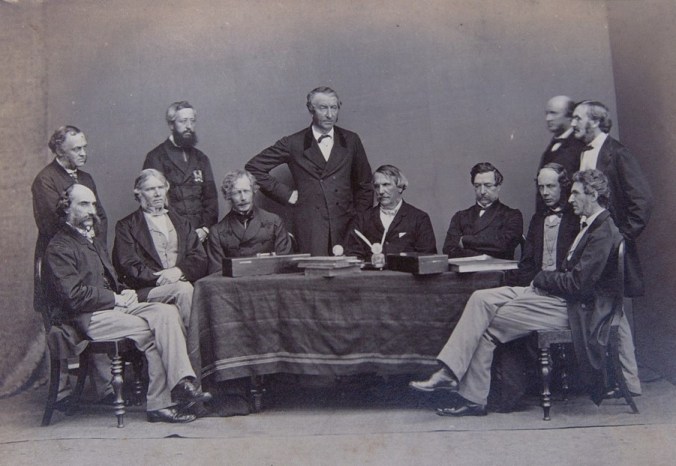
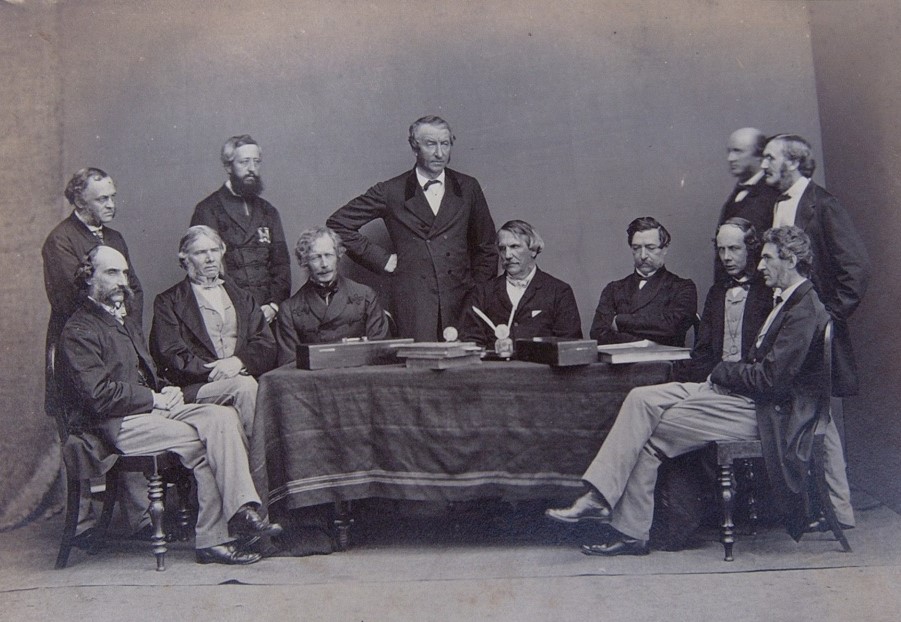
The administrator to Queen’s in the late 19th Century was such a Haileybury man. He had served his whole civil service career in India. He had been part of the building of Calcutta as the EIC’s administration centre; he had served as a local magistrate on the Gangetic Plains; he had seen hostile action in the Indian Uprising (then called the Mutiny); and, latterly, he had served as the Financial Secretary to the Viceroy, Lord Lawrence of India, where he prepared the budgets for the continent and the British Army on behalf of Her Majesty’s Treasury. He was himself the son of an enobled parliamentarian and famous lawyer. He stands on the left in the picture above in support of the Council of India and the Lords Lawrence and Napier. 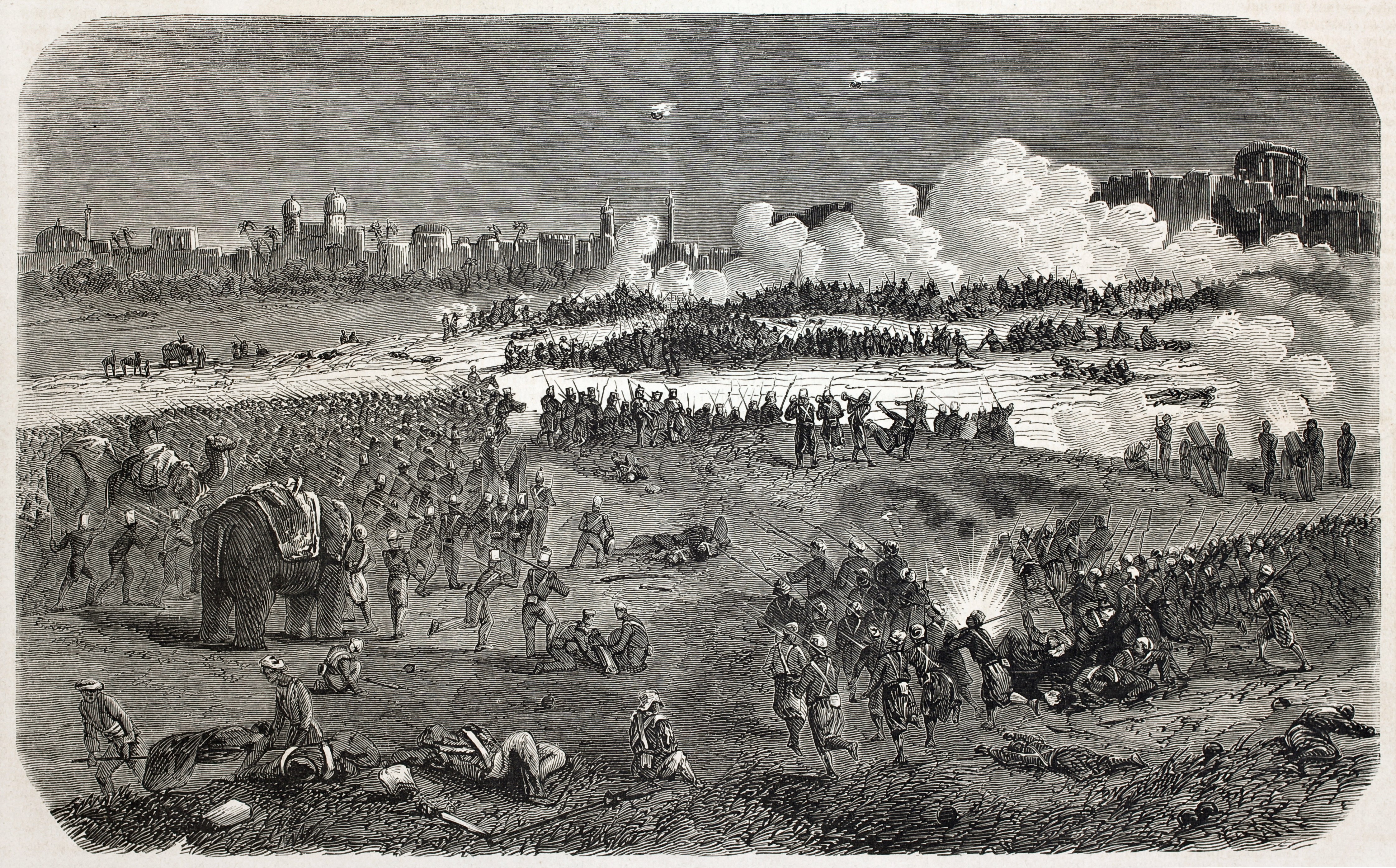
On his retirement from the EIC, he became “Mr. Treasurer” at Queen’s. He was an efficient administrator and stood no nonsense from anybody. The medical staff, deeply upset by his modernising ways, especially in nursing, challenged him constantly on his decisions. He was having none of it. They had met their match, and more, in “Mr. Treasurer”.
A bust-up was brewing – Mr. Treasurer, the new Matron, and the increasingly truculent doctors.
 Old Lady by the Sea