The Courtroom
The charge of ‘Felonious Killing and Slaying’ was so serious that the trial had to be heard at London’s Central Criminal Court, the Old Bailey.

Engraving of trial in Old Bailey court room from Victorian era magazine dated 1898. f8 archive / Alamy Stock Photo – Bailey courtroom.
The Old Bailey is located just outside the former western wall of the City of London which follows the line of the original fortified wall or “bailey”. In the 19th century, it was located close to Newgate Prison to allow the prisoners to be brought to the courtroom easily.
The courtroom’s design emphasised the contest between the accused and the rest of the court. The accused stood at “the bar” (or in the “dock”) directly facing the witness box where prosecution and defence witnesses testified. The jurors sat in stalls to the right of the defendant, and the clerks, lawyers and note-takers (who wrote up the proceedings) sat at a mahogany semi-circular table below the Judges’ bench.
The accused would have climbed the stairs from the holding cell below the dock to face the court when called. The lavish provision for the Judges and their servants contrasted dramatically with the prisoners’ quarters in the basement.
Fee-paying spectators sat in a gallery behind and above the jurors. It was all very cramped, noisy, dark and airless.
The Judge
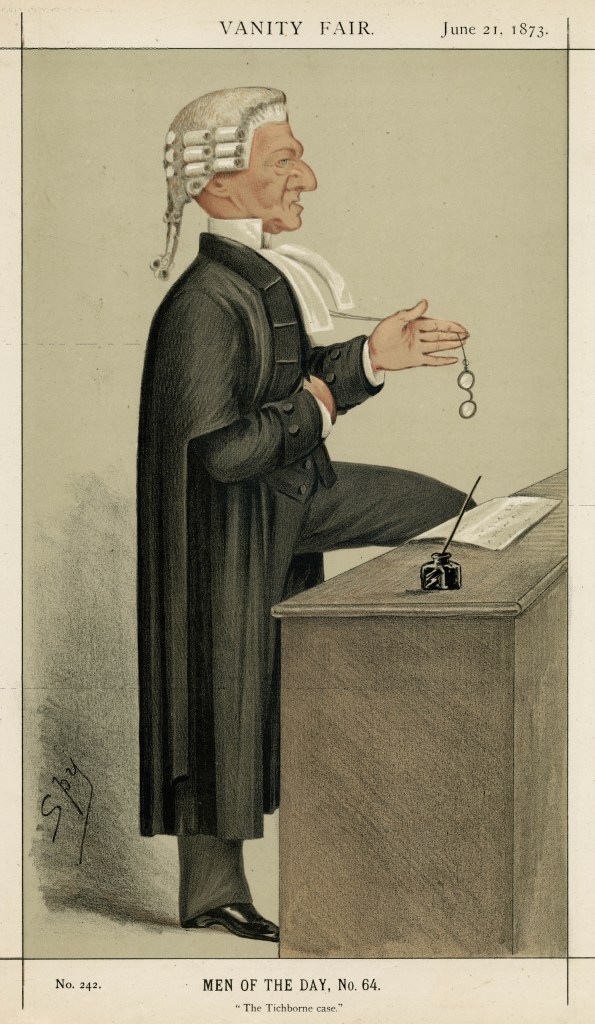
Judge Henry Hawkins presided. “Mr. Justice” Hawkins was 63 years old at the time of the trial and had been a judge on the Queen’s Bench Criminal Division for the previous four years.
Born in Hertfordshire, he trained at Middle Temple Inn and was called to the bar in 1843 and took silk (became Queen’s Counsel, QC) in 1858.
He specialised in murder cases and was renowned, rather unfairly, as “Hanging Hawkins” for he was known to be lenient in some cases. For example, in “the Penge Case”, he carefully teased out the parameters of murder and manslaughter, and ill-treatment and intentional neglect – issues of great importance in our trial.
He was small and of slender build and sensitive to criticism. He loved horse-racing, and indeed, he was a member of the Jockey Club. He was made a peer in 1899 and sat in the House of Lords as Baron Brampton of Brampton in Huntingdonshire.
The Prosecutor

Mr., later Sir, Harry Bodkin Poland was 51 years old at the time of the trial. He was born and raised in London and he trained at Inner Temple Inn. He was called to the bar in 1851, and became a bencher at the Inn in 1879, and took silk in 1888.
Although much experienced in common law work, he followed his uncle, Sir William Henry Bodkin to the criminal bar at the Old Bailey. He shared his Chambers with his friend Hardinge Gifford who became the Lord Chancellor in 1885.
He was a quiet and unimpassioned man who was successful with juries because of his forensic skills with minute details. He cultivated his studious look with his old-fashioned garb and black skull cap.
The Defender
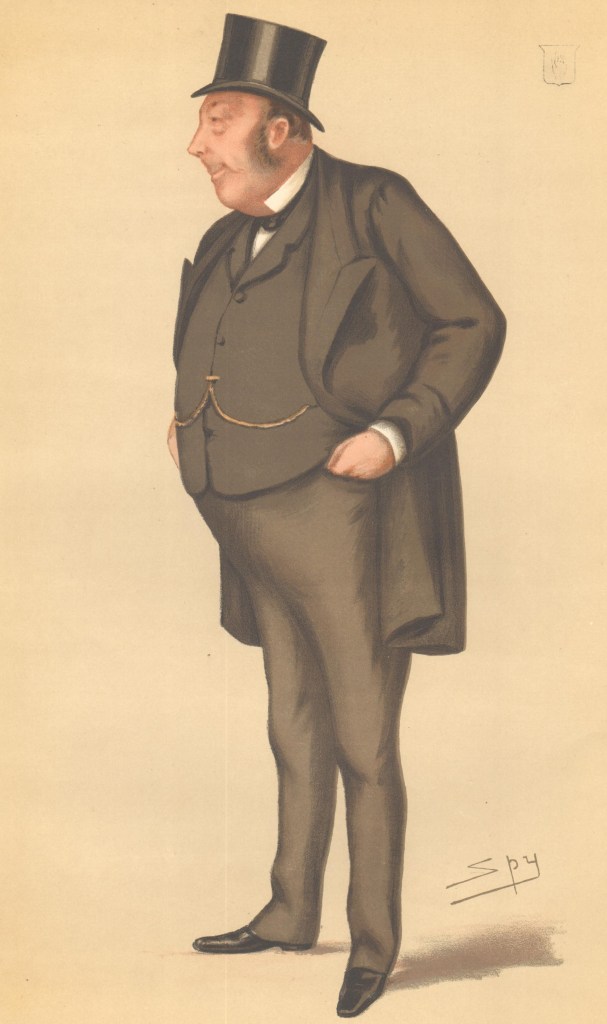
Mr., later Sir, John Holker was 52 years old at the time of the trial. He was born and raised in Bury in Lancashire where he was expected to enter the Church. Instead, he was articled to a local solicitor.
His preference for the law led him to move to London to train as a lawyer in Gray’s Inn. He was called to the bar in 1854 and took silk in 1866. He too was a bencher at the Inn and although he was perceived to be persuasive and shrewd, he was known as “Sleepy Jack Holker” by his fellow barristers when he moved back to Manchester where he got little work.
He was a tall, plain, lumbering Lancashire man who had no ingenuity or eloquence. He was known to be dull and honest.
He became a politician. He was twice elected in 1874 and 1880 as a conservative member for Preston, and he was knighted and made Solicitor General by Disraeli in 1874, and then Attorney General in 1875. When the Government under Lord Beaconsfield fell in 1880, Sir John returned to private practice and took our case.
The Weather
The summer of that year was cold, wet and dull. Despite it being June, fog hung around most mornings and it rained for 21 days in July.
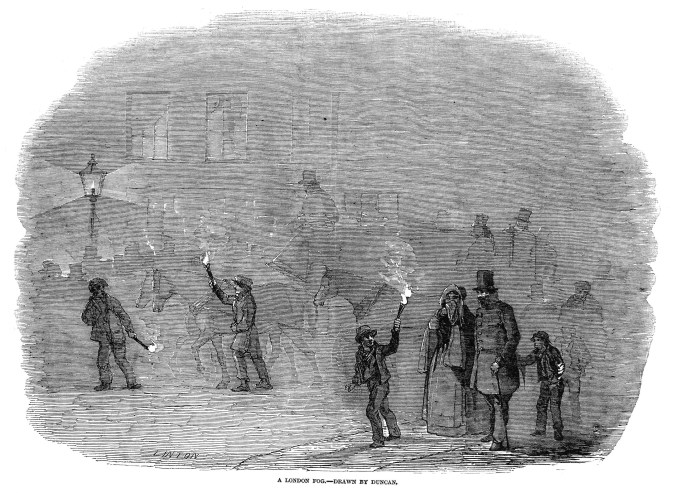
The British Medical Journal published articles on the ‘Great Cold’ and the dense fog, driven by westerly winds, which caused many respiratory deaths.
August was warmer and drier but dull – it was always cloudy and the limited sunshine was only sufficient to burn off the fog to a haze.
On the first day of the trial in that August, it was very cold at 46⁰F and a light fog added to the gloomy atmosphere.
The First Day of the Trial
The accused nurse was brought up from cells to the dock. Mr. Poland rose for the prosecution and called the deceased’s husband, Mr. Morgan, as the first witness.
Mr. Morgan gave his name and address and details about his recently dead wife. She was nearly 27 years old and they had been married for nine years. He gave the details of his encounter with the accused and his tragic wife’s end. She was well and chirpy for the first six weeks and then he found her altered and very bruised on her arm and chest.
“The accused said my wife, Louey, was hysterical and it was a bad case”. Mr. Morgan said that they did not want anything to do with the accused as Louey was afraid of her.
On the day of Louey’s death, Mr. Morgan was sent for. The accused had been dismissed, and Louey died at five minutes past 11pm. “She never rallied no more” said Mr. Morgan.
 Old Lady by the Sea