Dr. Pavy’s Testimony

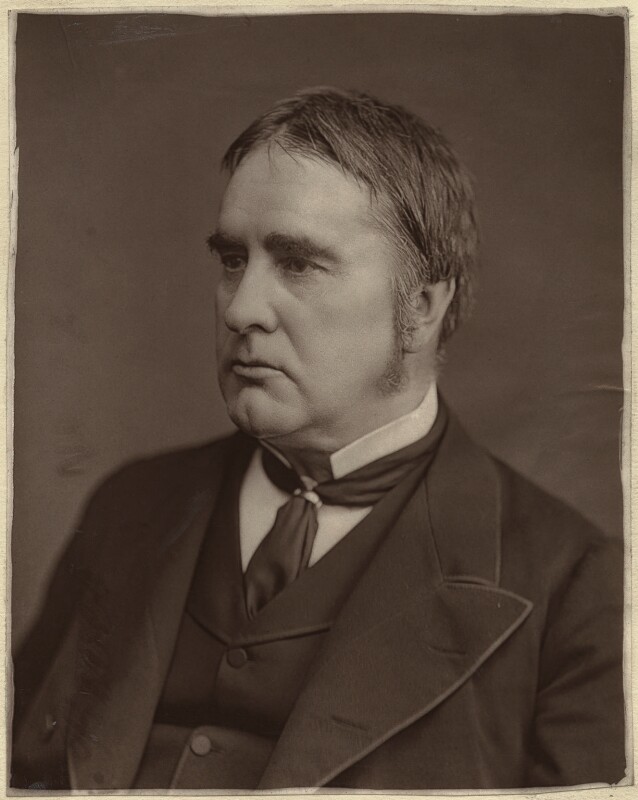
Dr. Frederick Pavy, one of the Hospital’s senior physicians, and a Fellow of the Royal College of Physicians, confirmed to the court that Louey, No. 2 of Mary Ward, had been his patient. He confirmed that his diagnosis was that of consumption, otherwise known as phthisis, affecting the lower left lung, and that she complained of various erratic pains, which, in the absence of any tangible cause, he put down to her being hysterical. His opinion, he said, was supported by her history, which included marriage at 16 years of age; she had one child a year later, and none since.
The diagnosis of consumption, he explained, was written on the card above Louey’s bed for the nursing staff by Dr. Pavy’s clinical clerk, who also wrote down the prescription as dictated by the physician.

Dr. Pavy visited Louey most days and found her general weakness to be progressive, and he confirmed that he had asked Sister Mary to get Louey up in the evening if possible, saying that the patient would get weaker if she remained in bed.
On his ward round after the fateful bath, he recalled for the court: “I was struck with her altered appearance, and I made the exclamation, ‘what has occurred to make this alteration?'” His patient was in a feeble state and crying and, in front of the students, Dr. Pavy put his ear to her mouth, as he was hard of hearing himself, and heard her say, while crying, “I was taken to the bathroom this morning, and placed in a bath of cold water to begin with, and was kept in the bath for an hour and a half.” She said that she had not been able to get warm since.
Dr. Pavy sent for Sister Mary and ordered an inquiry, making clear that “the matter must be fully investigated.” And he ordered his house physician, Mr. Howell, to obtain full particulars which were to be placed before Dr. Pavy on his next visit. Dr. Pavy confirmed that he had not ordered the bath for Louey, a “medical bath,” but agreed that an ordinary “cleansing bath” would not be improper as she had soiled herself.
Dr. Pavy described in great detail the terrible and extensive bruising and abrasions on his patient, and her deterioration to a state of virtual vacancy on the day before she died. Finally, he explained that the episode of the bath was probably “sufficient exciting cause” to exacerbate the tubercular inflammation of the brain of which his patient had died some days later.
Dr. Pavy “had caused the nurse to be removed from the ward” thinking her presence was prejudicial to the patient. In consultation with his colleague, Dr. Stephens, Dr. Pavy confirmed that the accused was removed immediately, and subsequently dismissed by the administrator.
His hostile opinion of the accused weighed with the court: “the impropriety which the prisoner was guilty of was, in my opinion, giving her a cold bath and keeping her there for a long time, and in taking her to the bath as she did- when she found the patient couldn’t walk she ought not to have exercised her own judgement….”
Is an Expert an Expert Witness?
A powerful statement of the facts according to Dr. Pavy had been laid before the court. Dr. Pavy had been a physician for 33 years at this prestigious London teaching hospital. He had been a scholar at the Merchant Taylor School before University, and he had studied as a medical student and junior doctor under Dr. Richard Bright, the discoverer of Bright’s disease, before specialising himself in diabetes.
His own research had led to the definition of what became known as Pavy’s Disease. He was a recognised expert, and lectured in anatomy and physiology for London University. Indeed, he would go on to be the President of the Medical and Chiurgical Society of London and President of the Pathological Society of London in the years after the trial in the early 1890s.
His expertise was recognised by the Royal College of Physicians when its council invited Dr. Pavy to give the annual lectures in 1862 and 1878. In recognition of his great contribution to medicine, he was made a Fellow of the Royal Society in 1863.
How could Sir John Holker challenge such a man’s powerful testimony and get a fair hearing for the accused nurse? He had his work cut out.
The Introduction of Doubt
Sir John’s cross-examination established that the bruises had nothing to do with Louey’s death. Dr. Pavy agreed that although her skin was “what ordinary mortals would call black and blue,” the skin of an invalid is easily discoloured. Sir John also established that Louey’s pre-existing cyst in the womb, which was found to be in a state of suppuration at post-mortem, was likely to be the cause of her infertility, and that she had died of inflammation of the brain, tubercular meningitis.
Sir John had studied the post-mortem report carefully and he was disconcertingly persistent in his questioning about the tubercles in the patient’s brain. He got Dr. Pavy to declare “that the tubercle of the brain is discovered in post-mortem examinations”, and that “a patient’s aches and pains, objections to exercising, and involuntarily cast of motions” may be due to the disease rather than hysteria.
He then questioned the diagnosis of consumption in Louey’s left lung and of her hysterical tendencies. Sir John established that one of the clinical clerk’s jobs was to write the diagnosis on a card which was placed above the patient’s bed for the nurses’ information. He also established that such cards were placed “not unfrequently” some time after admission as the diagnosis could not always be established on initial examination. Sir John had found cards with different writing in the clinical report which Dr. Pavy could not explain adequately. Had the patient’s clinical report been altered, added to, after her death when the results of the post-mortem were known? Could he, or his clinical clerk, have been trying to falsify the notes?
And was the knowledge so gained used by Dr. Pavy in his testimony to construct the facts as he saw them with hindsight? Sir John had introduced an element of doubt.
Subsequent examination of Dr. Pavy and his junior, Mr. Howell, confirmed that there had been no evidence of hysteria although Mr. Howell had thought Louey to be a rather “emotional patient.” Under oath, Mr. Howell said he agreed with everything Dr. Pavy had said.
It was the same when Sir John questioned Dr. Pavy’s medical registrar, Dr. Frederick Akbar Mahomed, who said “I think I agree with him entirely”. But Dr. Mahomed added that he thought the patient’s symptoms-high temperature and pain-were due to the suppurating pelvic cyst found at the post-mortem. Like Mr. Howell, he too saw no signs of hysteria but, crucially, he was told by one of Dr. Pavy’s clinical clerks that the patient seemed to be hysterical.
The Issue of Dr. Pavy’s Attitudes
Turning to Dr. Pavy’s view of the nursing dispute at the hospital, Sir John established that “the public know well that there has been a good deal of unpleasantness” about the nurses, and some “fresh system of nursing”. Dr. Pavy declared that there were differences between the nurses, but that despite this, he did not give any special instructions to them about his patient’s care- “I left them to exercise their common sense and humanity” and “I leave it to them to form their own judgement as to whether the patient is in a fit condition to have a cleansing bath or not”.
Returning to Louey’s aches and pains, and the diagnosis of consumption with hysteria, Dr. Pavy confirmed his view that such symptoms, when seen in “the male subject”, were not due to hysteria. He believed that hysteria was “necessarily belonging to females” and he added “I have not known men hysterical, but hypochondriacal”.
Dr. Pavy confirmed that he had not seen any hysterical fits in his patient but admitted having spoken about the woman’s hysterical symptoms. When pressed about his instructions to Sister Mary, he admitted that he had thought that the patient should be got up. After Sister Mary had pointed out the pain in Louey’s left leg, and he saw that she was weak, Dr. Pavy said to the sister that “she must use her own judgement on the subject”. He also said “I do not tell the sister of the ward what the disease is which the patient is suffering from- the sister has nothing to do with the name of the disease; she has to do with the nursing arrangements, which are conducted on general principles….”
What are we to make of all this? Dr. Pavy had seemed confident in his initial evidence: the patient was hysterical, but she had been killed by inappropriate treatment by the nurse in charge. Now under Holker’s questioning things began to appear in a new light.
There appear to be inconsistencies in Dr. Pavy’s views of nurses exercising judgement; a disturbing gulf between the medical and nursing staff; and a persistent assumption that a woman whose symptoms could not be otherwise explained, was likely to be suffering from hysteria.
It seems a case of “nothing to do with me Guv”. Come back next time to hear about Sir John’s challenge of Dr. Pavy with another expert witness – Sir William Gull, the Queen’s Physician.
 Old Lady by the Sea