The autumnal equinox was September 22nd and, right on cue, the first of the new season’s storms has arrived. The days are getting shorter now, and the light is thinner. And you really feel the early morning chill in the garden.
When a storm is rising
out in the Atlantic, you can feel the wind start to pick up in the garden, and
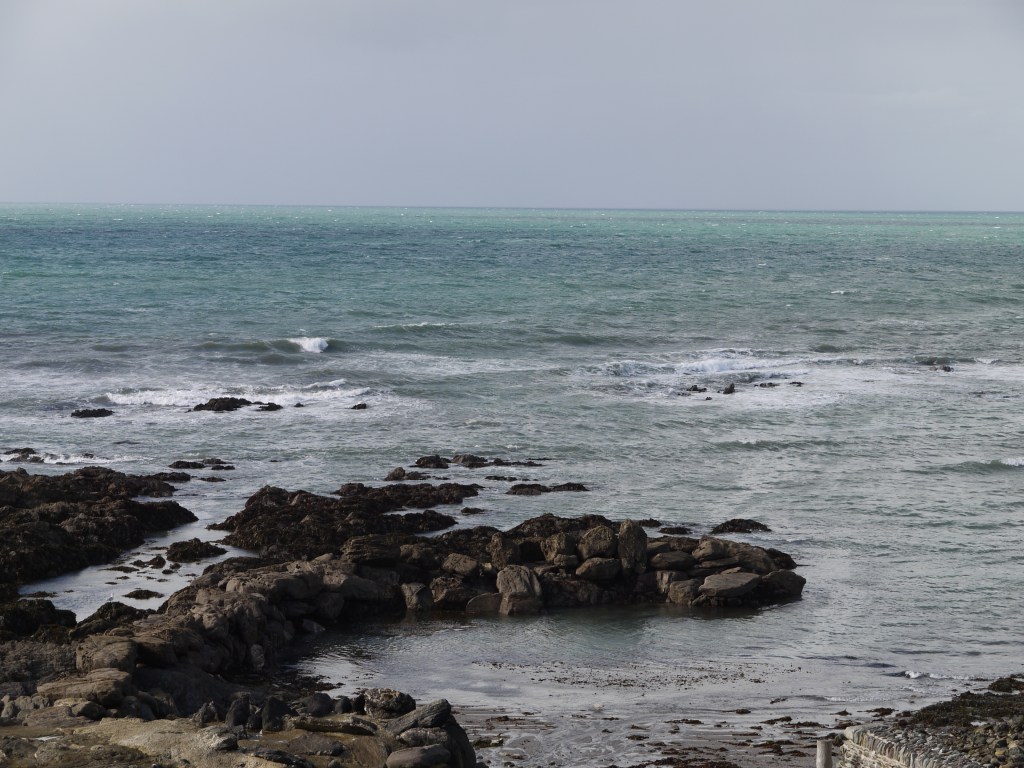
the sky darkens. Then the sea in our bay becomes an alternating mix of milky
turquoise and silvery shimmers as the sun tries to break through the thickening
clouds.
Our storms rise off the west coast of Africa and they travel westwards to the Caribbean and from there, northward, skirting the coast of America and Canada before travelling eastwards, still laden with water and energy, to stir up our bay. The rain is very welcome, despite the salt-blasting, as the summer has been unusually dry, and it has been very hard work to keep everything alive and well.
The secret garden is
still going strong as it’s rather sheltered. The statuesque agapanthuses have
gone to seed but they are still a show, as are the stalwart begonias. They love
this spot.
Secret Garden
The veggie garden has
just about finished and the last crop of red and green tomatoes have been
picked, pureed and pickled, ready for the winter’s store cupboard.
The south-facing terraces, bathed in the summer’s light for six months, now face the full force of nature but there is a final show of pinks and reds. The sedums and roses give a welcome pop of colour as they try to hang on for a bit longer.
The remains of storm Humberto have arrived. It’s very windy and wet so the planned repairs to the garden benches and chairs, and the pond and riverbank restoration work, will have to wait. But when we get a break in the weather, the fresh topsoil will be spread, and the bulbs will be planted before storm Lorenzo arrives.
Come back next time to see how the autumn is progressing.
The summer has arrived with a heatwave. It’s been in the 30s but the onshore breezes make it feel more bearable.
All that heat, and the occasional summer downpour, created a great burst of growth in our seaside garden. The agapanthuses and sunflowers have burst into life, and the border plants compete for your attention.
The veggies too have completed their growth cycle from seed to treats for the table. It’s been very busy keeping up with their production – there is plenty of work in harvesting, preparing and cooking everything ready for the larder. Friends and neighbours share in the bounty.
Down by the seashore and old harbour, it’s calm today with nothing stirring except the water moving on its continuous six hour tidal cycle.
The “wreckers’ rocks”, covered once again, resume their menace for naïve sailors. On a cloudless night, the moon creates a shaft of silver light that bathes the bay in an eerie glow. Sometimes it’s enough to walk along the beach just to take it all in and watch the night sky’s show of the milky way, the bright-as-diamond planets, and now and then, the shooting stars.
The seasons change a little later here by the sea but once the summer solstice has passed (22nd June), we shift rapidly into those long sunny days of childhood memories. The winter’s drenching rain and fierce salt blasting from the storms is now in the past. Spring is a short intermission between the gloom of winter and the intense brightness of summer, and it is the tulips which signal that change is on the way.
The poppies, foxgloves and the old roses, all salt-hardy, come next while the wisteria and clematises start their growth spurts. The garden changes from its dull pared back emptiness to its luxurious abundance in a matter of weeks.
There is much in bud that will flower soon – the agapanthuses and fuchsias, and the sweet peas.
Even the veggies sown only a few weeks ago are popping up for the summer sun.
The sea is still cold but the pod of dolphins who swim along the coast have already visited our bay. The birdlife has been active with the goldfinches and chaffinches building their nests in the hedges that border the brook that runs to the side of the garden. And the lobster boat is out and about, and you can see the lobster man throw his baskets over in the evenings.
This is my place of peace and quiet where I’m writing “The Trial” book. Chapter 1 is almost in its final state.
Come back next time to see what’s happened in the July garden.
To everyone’s surprise, including Dr. Pavy’s, Sir William Gull, the Queen’s physician, was called for the defence. Sir William had been a senior doctor and colleague of Dr. Pavy for many years and was now the Senior Consulting Physician to the hospital while he concentrated on his private practice and royal duties.
At the request of Sir John, Sir William made himself “acquainted with the details of the case,” and “perused the clinical report very accurately.” He had not spoken to any of the doctors involved.
His confident testimony concerning the symptoms and diagnosis of tubercles on the brain – loss of power in the limbs and inability to control the bowels – supported his belief that Louey had been suffering from a terminal disease of the brain, not hysteria. Sir William stated that an experienced physician would have known the difference. Gasp.
Sir William Gull
Sir William’s testimony discounted any relationship between the bath and the patient’s death. Tellingly, he asserted that the best judge of the state of the patient ought to be the physician who sees the patient from day to day so “he can descry the difference in the patient on the one day between what is done in that case, and what is alleged afterwards.”
Clearly Sir William did not think Dr.Pavy had done his job properly as he stated “in this case I should certainly put my judgement against the judgement of the physician who attended the case from commencement… I would put my opinion against that of Dr. Pavy.” Gasp.
Condemnation of Dr. Pavy
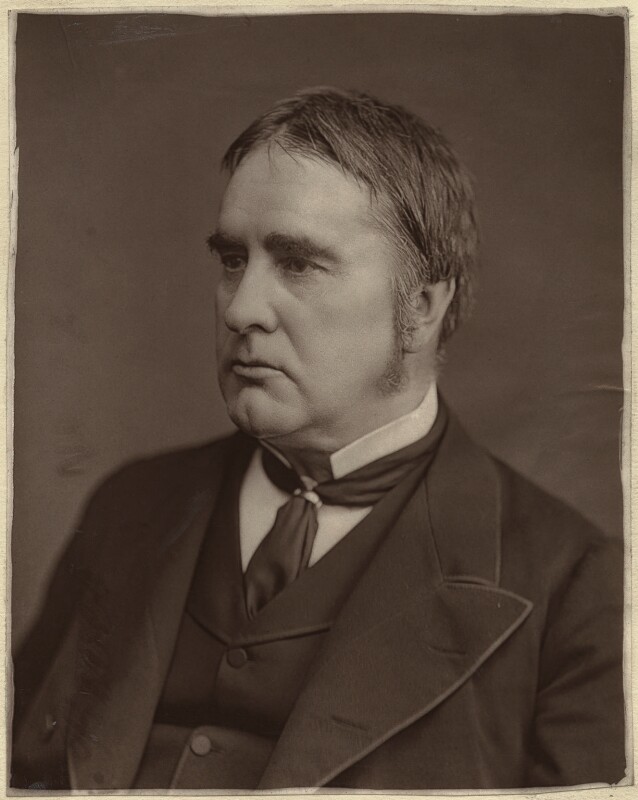
Frederick William Pavy
Source: Wikipedia
Turning to the clinical report prepared by Dr. Pavy’s clerk, Mr. Veitch, a student, Sir William accused Dr. Pavy of bad practice for leaving the case wholly to Mr. Veitch and, as a consequence, failing to inquire into the details. Best practice, according to Sir William, was for the attending physician to dictate and check the notes after each examination; he had a duty at least to see the notes. Gasp.
What a condemnation of a fellow doctor. Professional incompetence. Dr. Pavy was apoplectic with rage, especially as he, and colleagues, had strenuously tried to have the clinical report kept in camera in the medical school, refusing to hand it over to the court. They feared doctors would be on trial for incorrect diagnosis, not the nurse.
It was left to the hospital’s medical superintendent, under the court’s instruction, to search the medical school premises and find the notes, which were handed over to the court.
Questions for the Jury
On the one hand, we have testimony that the accused nurse was cruel to the patient and that Louey’s bruises and death were due to her negligent care in administering a punishing cold bath. On the other, we have evidence, including from a nun, that the accused had shown great kindness and patience in assisting a very ill patient to have a cleansing bath. The jury was told that Mary ward was very busy and that there were too few staff on duty to do everything that was required.
All this took place in the context of an unclear diagnosis and confused instructions from the medical staff to the nurses. The initial diagnosis of “hysteria” as recorded by the clerk went unchecked, thus reducing the focus on Louey’s symptoms. There was also an accusation that the senior physician in charge of the case was not paying it the attention it required.
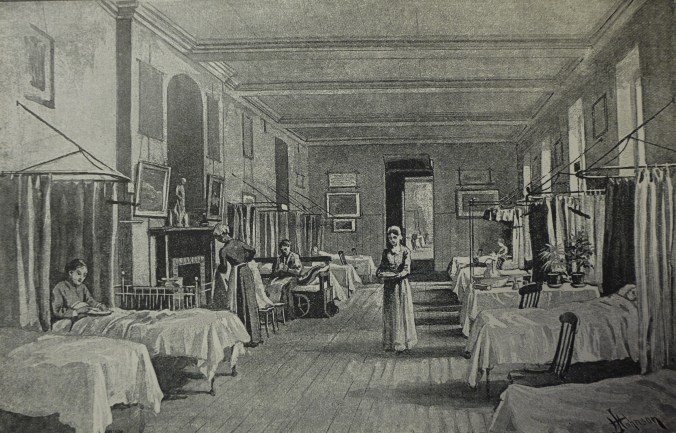
Mary Ward – The Scene of the Crime
What happened on Mary Ward? For the jury, the key questions included:
Did the cold bath kill Louey?
Was the accused nurse intentionally cruel?
Was the accused Louey’s killer?
The Outcome
Guilty
The jury added “we think there has been shown negligence on the part of the nurses, and that there should be a better supervision by the medical officers of the hospital.”
The sentence: Three Months’ Imprisonment, without hard labour.
HT28R7 In the kitchen of Holloway Prison, London, c1901 (1901). Artist: Unknown. Heritage Image Partnership Ltd / Alamy Stock Photo
This punishment seems to reflect the judge’s unease at the verdict. A spell in prison was inevitable after a manslaughter verdict but this was a very short sentence. Perhaps it was a case of something must be seen to be done.
Another Trial?
While the accused served her sentence, Dr. Pavy’s rage fuelled another trial through the summer and autumn of 1880. He, as a senior officer of the Royal College of Physicians, requested that Sir William be brought before its court to be censored and disbarred for “casting an imputed charge of professional incompetence on a professional brother.”
Many letters, both public and private, were exchanged casting the hospital in a very poor light. Its governors and the administrator stepped in to calm the feud. Sir William defended himself robustly accusing the College of over-reaching itself as it did not have the powers it claimed to proceed against him. It became a Mexican standoff. Dealings behind the scenes eventually closed the case before the Royal College. But the fact that one senior physician had so publicly attacked another’s competence resulted in a Parliamentary Inquiry. The dispute, on many levels, just kept on going despite the efforts of the hospital’s governors and administrator, and the Royal College.
And of the accused? She served her sentence and returned to nursing in South London, before making her way to India, to Calcutta, where she seems to have prospered, according to local probate records.
End note: There is much more to this story and those of the accused, the Matron and her new “lady nurses”, the administrator, Dr. Pavy and his medical colleagues, and Sir William Gull.
The complex intersection of the underlying tensions – gender politics, shifting boundaries of medical authority, and religious intolerance – are told in my forthcoming book.
For now, I’m going on writing leave to finish it. You can follow its progress in a new blog series starting next month:
Dr. Frederick Pavy, one of the Hospital’s senior physicians, and a Fellow of the Royal College of Physicians, confirmed to the court that Louey, No. 2 of Mary Ward, had been his patient. He confirmed that his diagnosis was that of consumption, otherwise known as phthisis, affecting the lower left lung, and that she complained of various erratic pains, which, in the absence of any tangible cause, he put down to her being hysterical. His opinion, he said, was supported by her history, which included marriage at 16 years of age; she had one child a year later, and none since.
The diagnosis of consumption, he explained, was written on the card above Louey’s bed for the nursing staff by Dr. Pavy’s clinical clerk, who also wrote down the prescription as dictated by the physician.
Frederick William Pavy
Source: Wikipedia
Dr. Pavy visited Louey most days and found her general weakness to be progressive, and he confirmed that he had asked Sister Mary to get Louey up in the evening if possible, saying that the patient would get weaker if she remained in bed.
On his ward round after the fateful bath, he recalled for the court: “I was struck with her altered appearance, and I made the exclamation, ‘what has occurred to make this alteration?'” His patient was in a feeble state and crying and, in front of the students, Dr. Pavy put his ear to her mouth, as he was hard of hearing himself, and heard her say, while crying, “I was taken to the bathroom this morning, and placed in a bath of cold water to begin with, and was kept in the bath for an hour and a half.” She said that she had not been able to get warm since.
Dr. Pavy sent for Sister Mary and ordered an inquiry, making clear that “the matter must be fully investigated.” And he ordered his house physician, Mr. Howell, to obtain full particulars which were to be placed before Dr. Pavy on his next visit. Dr. Pavy confirmed that he had not ordered the bath for Louey, a “medical bath,” but agreed that an ordinary “cleansing bath” would not be improper as she had soiled herself.
Dr. Pavy described in great detail the terrible and extensive bruising and abrasions on his patient, and her deterioration to a state of virtual vacancy on the day before she died. Finally, he explained that the episode of the bath was probably “sufficient exciting cause” to exacerbate the tubercular inflammation of the brain of which his patient had died some days later.
Dr. Pavy “had caused the nurse to be removed from the ward” thinking her presence was prejudicial to the patient. In consultation with his colleague, Dr. Stephens, Dr. Pavy confirmed that the accused was removed immediately, and subsequently dismissed by the administrator.
His hostile opinion of the accused weighed with the court: “the impropriety which the prisoner was guilty of was, in my opinion, giving her a cold bath and keeping her there for a long time, and in taking her to the bath as she did- when she found the patient couldn’t walk she ought not to have exercised her own judgement….”
Is an Expert an Expert Witness?
A powerful statement of the facts according to Dr. Pavy had been laid before the court. Dr. Pavy had been a physician for 33 years at this prestigious London teaching hospital. He had been a scholar at the Merchant Taylor School before University, and he had studied as a medical student and junior doctor under Dr. Richard Bright, the discoverer of Bright’s disease, before specialising himself in diabetes.
His own research had led to the definition of what became known as Pavy’s Disease. He was a recognised expert, and lectured in anatomy and physiology for London University. Indeed, he would go on to be the President of the Medical and Chiurgical Society of London and President of the Pathological Society of London in the years after the trial in the early 1890s.
His expertise was recognised by the Royal College of Physicians when its council invited Dr. Pavy to give the annual lectures in 1862 and 1878. In recognition of his great contribution to medicine, he was made a Fellow of the Royal Society in 1863.
How could Sir John Holker challenge such a man’s powerful testimony and get a fair hearing for the accused nurse? He had his work cut out.
The Introduction of Doubt
Sir John’s cross-examination established that the bruises had nothing to do with Louey’s death. Dr. Pavy agreed that although her skin was “what ordinary mortals would call black and blue,” the skin of an invalid is easily discoloured. Sir John also established that Louey’s pre-existing cyst in the womb, which was found to be in a state of suppuration at post-mortem, was likely to be the cause of her infertility, and that she had died of inflammation of the brain, tubercular meningitis.
Sir John had studied the post-mortem report carefully and he was disconcertingly persistent in his questioning about the tubercles in the patient’s brain. He got Dr. Pavy to declare “that the tubercle of the brain is discovered in post-mortem examinations”, and that “a patient’s aches and pains, objections to exercising, and involuntarily cast of motions” may be due to the disease rather than hysteria.
He then questioned the diagnosis of consumption in Louey’s left lung and of her hysterical tendencies. Sir John established that one of the clinical clerk’s jobs was to write the diagnosis on a card which was placed above the patient’s bed for the nurses’ information. He also established that such cards were placed “not unfrequently” some time after admission as the diagnosis could not always be established on initial examination. Sir John had found cards with different writing in the clinical report which Dr. Pavy could not explain adequately. Had the patient’s clinical report been altered, added to, after her death when the results of the post-mortem were known? Could he, or his clinical clerk, have been trying to falsify the notes?
And was the knowledge so gained used by Dr. Pavy in his testimony to construct the facts as he saw them with hindsight? Sir John had introduced an element of doubt.
Subsequent examination of Dr. Pavy and his junior, Mr. Howell, confirmed that there had been no evidence of hysteria although Mr. Howell had thought Louey to be a rather “emotional patient.” Under oath, Mr. Howell said he agreed with everything Dr. Pavy had said.
It was the same when Sir John questioned Dr. Pavy’s medical registrar, Dr. Frederick Akbar Mahomed, who said “I think I agree with him entirely”. But Dr. Mahomed added that he thought the patient’s symptoms-high temperature and pain-were due to the suppurating pelvic cyst found at the post-mortem. Like Mr. Howell, he too saw no signs of hysteria but, crucially, he was told by one of Dr. Pavy’s clinical clerks that the patient seemed to be hysterical.
The Issue of Dr. Pavy’s Attitudes
Turning to Dr. Pavy’s view of the nursing dispute at the hospital, Sir John established that “the public know well that there has been a good deal of unpleasantness” about the nurses, and some “fresh system of nursing”. Dr. Pavy declared that there were differences between the nurses, but that despite this, he did not give any special instructions to them about his patient’s care- “I left them to exercise their common sense and humanity” and “I leave it to them to form their own judgement as to whether the patient is in a fit condition to have a cleansing bath or not”.
Returning to Louey’s aches and pains, and the diagnosis of consumption with hysteria, Dr. Pavy confirmed his view that such symptoms, when seen in “the male subject”, were not due to hysteria. He believed that hysteria was “necessarily belonging to females” and he added “I have not known men hysterical, but hypochondriacal”.
Dr. Pavy confirmed that he had not seen any hysterical fits in his patient but admitted having spoken about the woman’s hysterical symptoms. When pressed about his instructions to Sister Mary, he admitted that he had thought that the patient should be got up. After Sister Mary had pointed out the pain in Louey’s left leg, and he saw that she was weak, Dr. Pavy said to the sister that “she must use her own judgement on the subject”. He also said “I do not tell the sister of the ward what the disease is which the patient is suffering from- the sister has nothing to do with the name of the disease; she has to do with the nursing arrangements, which are conducted on general principles….”
What are we to make of all this? Dr. Pavy had seemed confident in his initial evidence: the patient was hysterical, but she had been killed by inappropriate treatment by the nurse in charge. Now under Holker’s questioning things began to appear in a new light.
There appear to be inconsistencies in Dr. Pavy’s views of nurses exercising judgement; a disturbing gulf between the medical and nursing staff; and a persistent assumption that a woman whose symptoms could not be otherwise explained, was likely to be suffering from hysteria.
It seems a case of “nothing to do with me Guv”. Come back next time to hear about Sir John’s challenge of Dr. Pavy with another expert witness – Sir William Gull, the Queen’s Physician.
The ward maid, Emma Costello, gave testimony to the accused’s cruelty and heartlessness to Louey, the deceased. Under questioning by the prosecutor, Mr. Poland, she described how the accused had left Louey in a cold bath on the morning of the 5th July after having dragged and kicked the patient down the hall to the bathroom. At about a quarter past ten, Miss Costello described finding Louey alone, cold and shivering in the bath which had only sufficient water to cover Louey’s legs and hips. Louey was trying to get out of the bath but couldn’t, she had no strength. “Oh Mary, I’m so cold”, she moaned said Miss Costello on inquiring where Louey’s nurse was. The nurse was nowhere to be seen. The picture of the accused was set for all to see: she was cruel and heartless.
Miss Costello was a maid on St. Mary’s ward. The Sister in charge of the ward was known as “Sister Mary”, and the nurses and maids were known as “Mary”. Their identities were subsumed into the functioning of the ward. Similarly, the patients were known by the number of their bed. Louey was in bed number two, hence she was referred to as “No. 2”. The ward setting was rather impersonal and business-like. Continue reading →
There, in front of the prisoner as she was brought up from the cells to the court room dock, were Messrs. Poland and Montagu Williams for the prosecution. At the lawyers’ table with them were Sir John Holker and Mr. Mead, her defence team. It was very crowded in the learned pit as the hospital’s Treasurer and its Governors were represented by Mr. Baggalley and his team; and the medical staff, not to be outdone, were represented separately by Sir Hardinge Gifford.
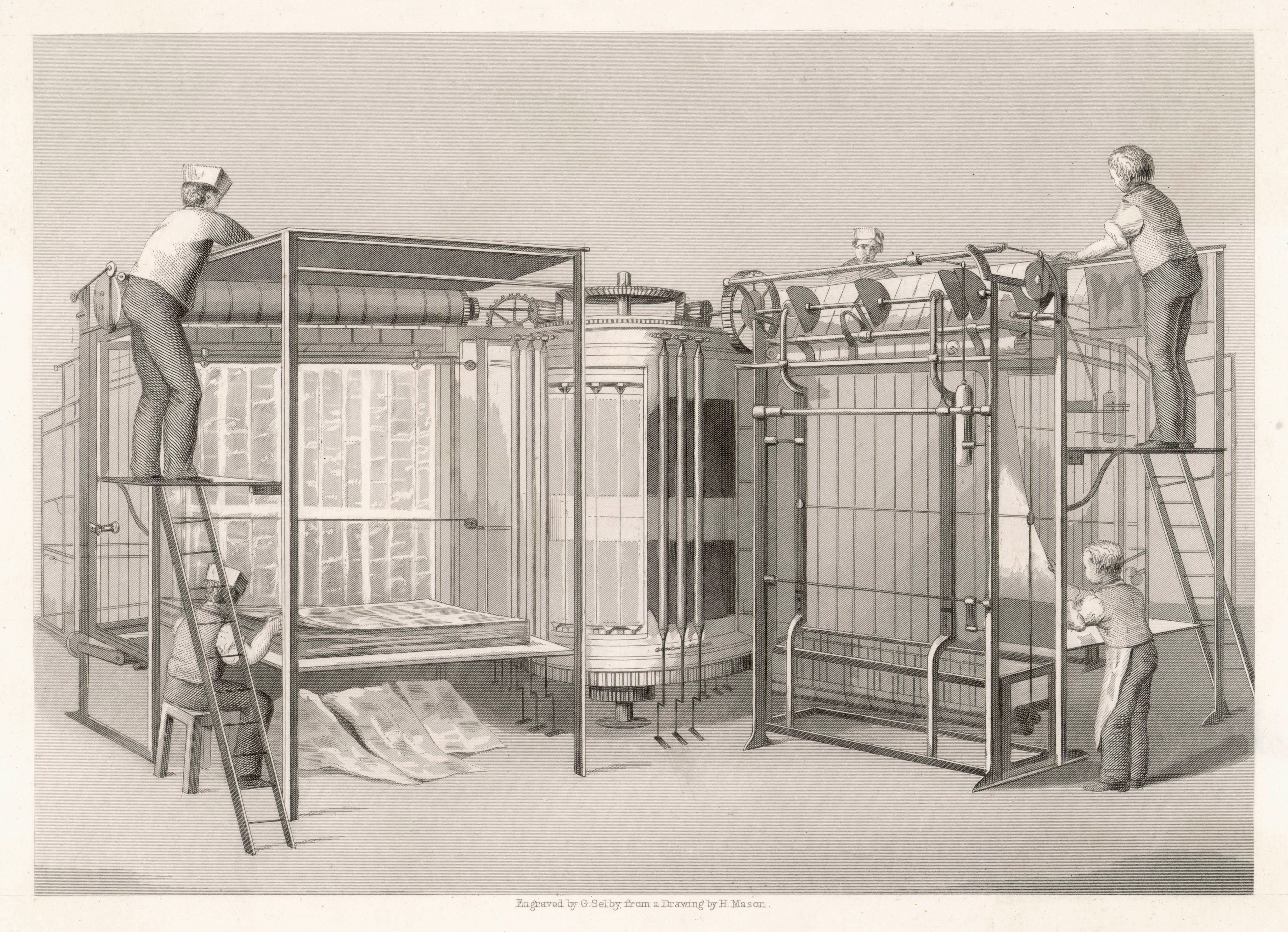
Looking up, the prisoner saw the reporters packed into the public gallery. The newspaper industry had expanded rapidly as massive new technology had shifted the printing process to a scale unimaginable only a few years earlier.
The Applegath printing press, as used by ‘The Times’ and by the ‘Illustrated London News’. Date: 1851
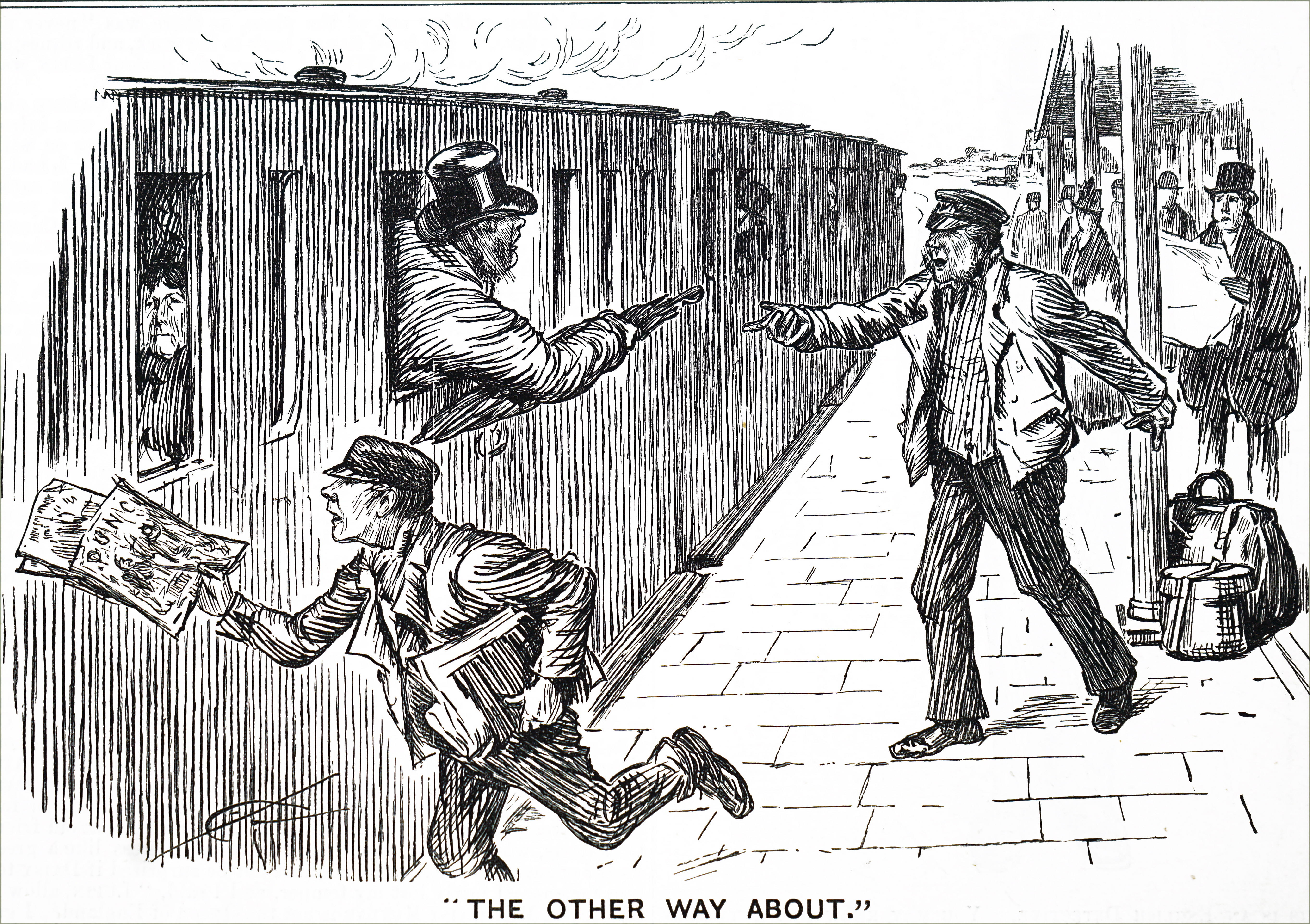
The public loved its news, especially crime, and the many Dailies and Weeklies carried much detail of the Old Bailey trials. News from the premier publication The Timesof London was syndicated to the local provincial papers who reprinted the stories the next day helped by their rapid transit in the ever-expanding railways.
Illustration depicting London paper boys chasing a train to make a sale to passengers. Dated 19th century
The charge of ‘Felonious Killing and Slaying’ was so serious that the trial had to be heard at London’s Central Criminal Court, the Old Bailey.
Engraving of trial in Old Bailey court room from Victorian era magazine dated 1898. f8 archive / Alamy Stock Photo – Bailey courtroom.
The Old Bailey is located just outside the former western wall of the City of London which follows the line of the original fortified wall or “bailey”. In the 19th century, it was located close to Newgate Prison to allow the prisoners to be brought to the courtroom easily.
The courtroom’s design emphasised the contest between the accused and the rest of the court. The accused stood at “the bar” (or in the “dock”) directly facing the witness box where prosecution and defence witnesses testified. The jurors sat in stalls to the right of the defendant, and the clerks, lawyers and note-takers (who wrote up the proceedings) sat at a mahogany semi-circular table below the Judges’ bench.
The accused would have climbed the stairs from the holding cell below the dock to face the court when called. The lavish provision for the Judges and their servants contrasted dramatically with the prisoners’ quarters in the basement.
Fee-paying spectators sat in a gallery behind and above the jurors. It was all very cramped, noisy, dark and airless.
The Judge
Henry Hawkins
Chronicle / Alamy Stock Photo
Judge Henry Hawkins presided. “Mr. Justice” Hawkins was 63 years old at the time of the trial and had been a judge on the Queen’s Bench Criminal Division for the previous four years.
Born in Hertfordshire, he trained at Middle Temple Inn and was called to the bar in 1843 and took silk (became Queen’s Counsel, QC) in 1858.
He specialised in murder cases and was renowned, rather unfairly, as “Hanging Hawkins” for he was known to be lenient in some cases. For example, in “the Penge Case”, he carefully teased out the parameters of murder and manslaughter, and ill-treatment and intentional neglect – issues of great importance in our trial.
He was small and of slender build and sensitive to criticism. He loved horse-racing, and indeed, he was a member of the Jockey Club. He was made a peer in 1899 and sat in the House of Lords as Baron Brampton of Brampton in Huntingdonshire.
The Prosecutor
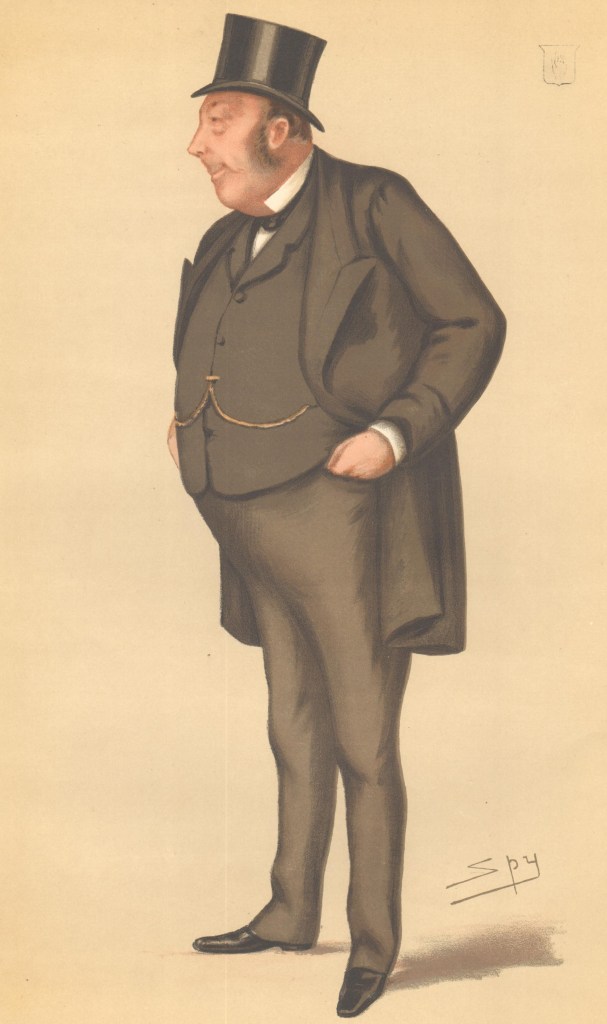
Harry Bodkin Poland Vanity Fair 13 March 1886. Historic Collection / Alamy Stock Photo
Mr., later Sir, Harry Bodkin Poland was 51 years old at the time of the trial. He was born and raised in London and he trained at Inner Temple Inn. He was called to the bar in 1851, and became a bencher at the Inn in 1879, and took silk in 1888.
Although much experienced in common law work, he followed his uncle, Sir William Henry Bodkin to the criminal bar at the Old Bailey. He shared his Chambers with his friend Hardinge Gifford who became the Lord Chancellor in 1885.
He was a quiet and unimpassioned man who was successful with juries because of his forensic skills with minute details. He cultivated his studious look with his old-fashioned garb and black skull cap.
The Defender
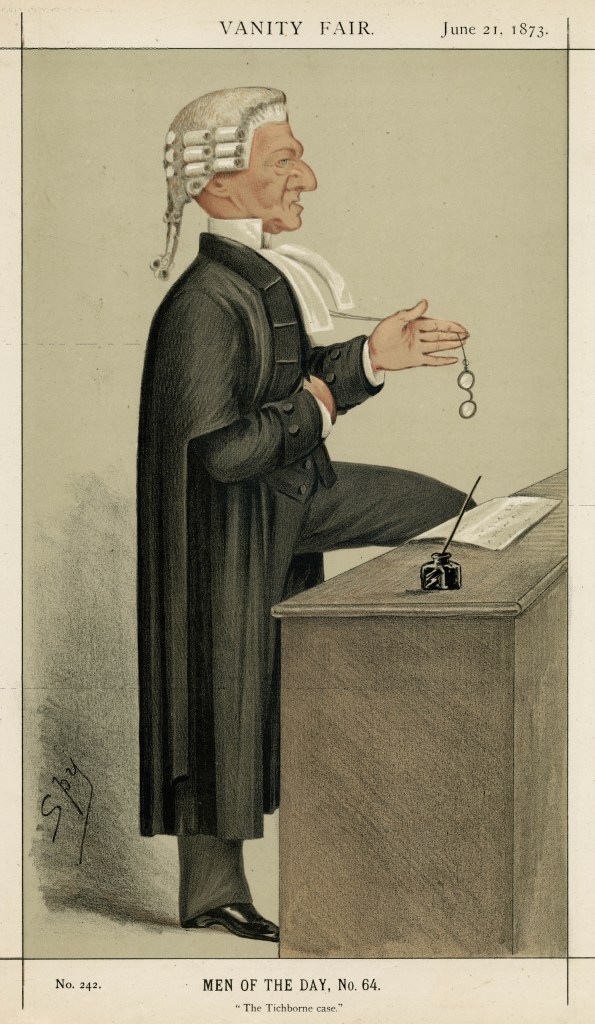
VANITY FAIR SPY CARTOON. Sir John Holker ‘Attorney-General’. Law. By Spy. 1878. Antiqua Print Gallery Ltd / Alamy Stock Photo.
Mr., later Sir, John Holker was 52 years old at the time of the trial. He was born and raised in Bury in Lancashire where he was expected to enter the Church. Instead, he was articled to a local solicitor.
His preference for the law led him to move to London to train as a lawyer in Gray’s Inn. He was called to the bar in 1854 and took silk in 1866. He too was a bencher at the Inn and although he was perceived to be persuasive and shrewd, he was known as “Sleepy Jack Holker” by his fellow barristers when he moved back to Manchester where he got little work.
He was a tall, plain, lumbering Lancashire man who had no ingenuity or eloquence. He was known to be dull and honest.
He became a politician. He was twice elected in 1874 and 1880 as a conservative member for Preston, and he was knighted and made Solicitor General by Disraeli in 1874, and then Attorney General in 1875. When the Government under Lord Beaconsfield fell in 1880, Sir John returned to private practice and took our case.
The Weather
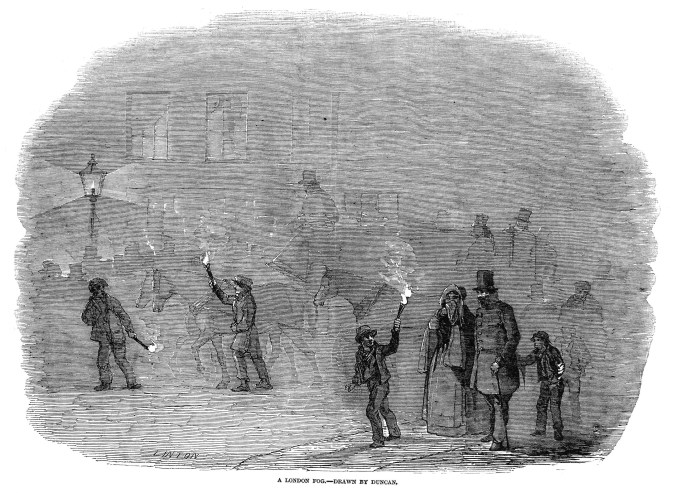
The summer of that year was cold, wet and dull. Despite it being June, fog hung around most mornings and it rained for 21 days in July.
LONDON: STREET SCENE, 1847. Pedestrians use torches to aid their journey through the foggy streets of London, England. Wood engraving from an English newspaper of 1847. Granger Historical Picture Archive / Alamy Stock Photo.
The British Medical Journal published articles on the ‘Great Cold’ and the dense fog, driven by westerly winds, which caused many respiratory deaths.
August was warmer and drier but dull – it was always cloudy and the limited sunshine was only sufficient to burn off the fog to a haze.
On the first day of the trial in that August, it was very cold at 46⁰F and a light fog added to the gloomy atmosphere.
The First Day of the Trial
The accused nurse was brought up from cells to the dock. Mr. Poland rose for the prosecution and called the deceased’s husband, Mr. Morgan, as the first witness.
Mr. Morgan gave his name and address and details about his recently dead wife. She was nearly 27 years old and they had been married for nine years. He gave the details of his encounter with the accused and his tragic wife’s end. She was well and chirpy for the first six weeks and then he found her altered and very bruised on her arm and chest.
“The accused said my wife, Louey, was hysterical and it was a bad case”. Mr. Morgan said that they did not want anything to do with the accused as Louey was afraid of her.
On the day of Louey’s death, Mr. Morgan was sent for. The accused had been dismissed, and Louey died at five minutes past 11pm. “She never rallied no more” said Mr. Morgan.
Come back next time to hear about Mr. Holker’s cross-examination of Louey’s husband . . . . .
To everyone, Christmas greetings and many thanks for all the
helpful comments on The Trial blogs. Wherever
you are, here’s hoping that you have a peaceful and happy New Year, and you
keep reading my blog.
2019 – An Auspicious Year
The coming Chinese New Year – 5th February – is auspicious. It celebrates the year of the pig. And reader, the pigs could be flying in 2019
as there are plans to publish The Trial
in the summer.
Then it’s the launch party and off to Hollywood.
As a loyal member of the readers’ panel, you can claim your complimentary copy of the first edition.
The Trial
The last five blogs have introduced you to the murky world
of London in the late 19th century when the trial took place.
We have had a glimpse of the powerful and aspiring
professions – lawyers, administrators, doctors – institutional life and formed
public opinion.
We have seen the beginnings of a malevolent force swirling
around a great London Teaching Hospital to blunt the formation of a new profession,
nursing.
This London Teaching Hospital became the crucible of the black art of organisational politics where gender, class and religious tensions fuelled the inter and intra-professional disputes that culminated in a nurse being tried for manslaughter.
This 19th century story resonates to this very
day.
Want to know more about the intricacies of medical and
nursing politics?
Come back in the New Year when we sit in Court Room 3 of the Old Bailey to hear about the terrible shenanigans of professional people and their jealous rivalries …
Hospitals and care for the poor in the 19th Century were provided by charitable institutions which were supported by generous benefactors. The rich paid for their own doctors and care at home. It was all very rudimentary.
By the late 19th Century, London was teeming with people who were jammed into overcrowded, filthy and insanitary conditions. Those in work were often injured in the course of their work. Poverty drove many women and children to prostitution and disease.
London Slums in 1872 in the Whitechapel area
Drunkenness and malnourishment were rife. Consequently, the demand for bigger hospitals and more care, and more funds, escalated year on year. It was getting out of control. This placed great burdens on the benefactors so those in charge of local hospitals held fund-raising events, flag days, and vied with each other to have the patronage of members of “Society”, titled and connected people, and above all, wealthy people.
As the funds flowed in, and their disbursements became more complicated, hospitals found themselves in need of more than a lowly clerk or local churchman to administer the monies. Continue reading →


































 Old Lady by the Sea